

You stand in front of the mirror, and the dress looks good. It will look good in photos, too. But the real test happens away from the mirror: sitting down for dinner, walking up a flight of stairs, turning on the dance floor, and standing under the lights for an entire evening. An unique prom dress that is perfect when you are standing still may not stay that way once the event begins.
That is the part most prom dress advice overlooks. Much of the shopping guidance focuses on “which dress photographs best” and says little about how the dress will behave while the person wearing it is actually moving. A more practical starting point is to consider three variables together: silhouette determines how you can move, fabric determines how the dress follows you, and fitting checks determine whether you will actually feel comfortable all night.
Silhouette Is Not Just an Aesthetic Choice—It Determines Freedom of Movement
A-line, ball gown, mermaid, sheath—these terms describe more than appearance. They also describe the spatial relationship between the dress and the body.
An A-line skirt gradually widens from the shoulder or bust line and leaves even space below the waist. That construction makes it relatively forgiving when you sit, walk, and climb stairs. If this is your first time choosing a long dress for a formal occasion, an A-line silhouette is usually the option that requires the least repeated adjustment.
A ball gown has more volume below the waist and more room in the skirt, but that also means you need to think about the actual setting: whether the skirt can fit through a car door, a narrow hallway, or the gaps between tables and chairs in a banquet hall. Its drama comes at a cost, and thinking through those physical limits in advance is far easier than awkwardly maneuvering around the venue later.
Mermaid and trumpet silhouettes stay fitted above the knee and flare only near the calf. They demand a closer fit at the waist, hips, and thighs, and when you sit, you especially need to check whether the fabric has enough give. If you plan to dance all night, do a continuous “sit—stand—turn” test during the try-on rather than only standing in front of the mirror.
Sheath or column silhouettes offer a clean vertical line, with movement somewhere between A-line and mermaid. They suit anyone who wants a sharp outline without a large skirt distracting from the overall look, but you still need to confirm that the skirt width allows a normal stride.
Fabric Determines How the Dress “Moves”
Two dresses with the same silhouette can feel completely different once the fabric changes.
Satin has a smooth surface and visible sheen, with a stronger sense of structure. It suits looks that call for clean lines and crisp drape, but fitted satin tends to crease horizontally when you sit or bend, so try sitting down in advance. If you choose satin, wear the underwear you plan to pair with the dress during the try-on and check how the fabric sits at the waist and hips in natural light; that is more useful than judging only the standing view.
Chiffon is light, breathable, and fluid, creating natural movement when you walk and turn. It is friendly for occasions that involve frequent movement, especially outdoor photos or dancing. But chiffon’s drape also means it offers less structural support. If the dress relies on a corset structure to hold its shape, confirm that the lining and bustline design are stable enough.
Tulle creates volume and airiness through layered construction without adding the obvious physical weight of heavier fabric. It has depth under lights and on camera, but during a try-on, check whether the layers affect sitting and whether the hem is easy for a heel to catch. Lace and sequin details add visual texture, but they can also create friction along the inner arms, underarms, or sides of the waist. A short try-on may not reveal these issues, so raise and lower your arms several times while wearing the dress.
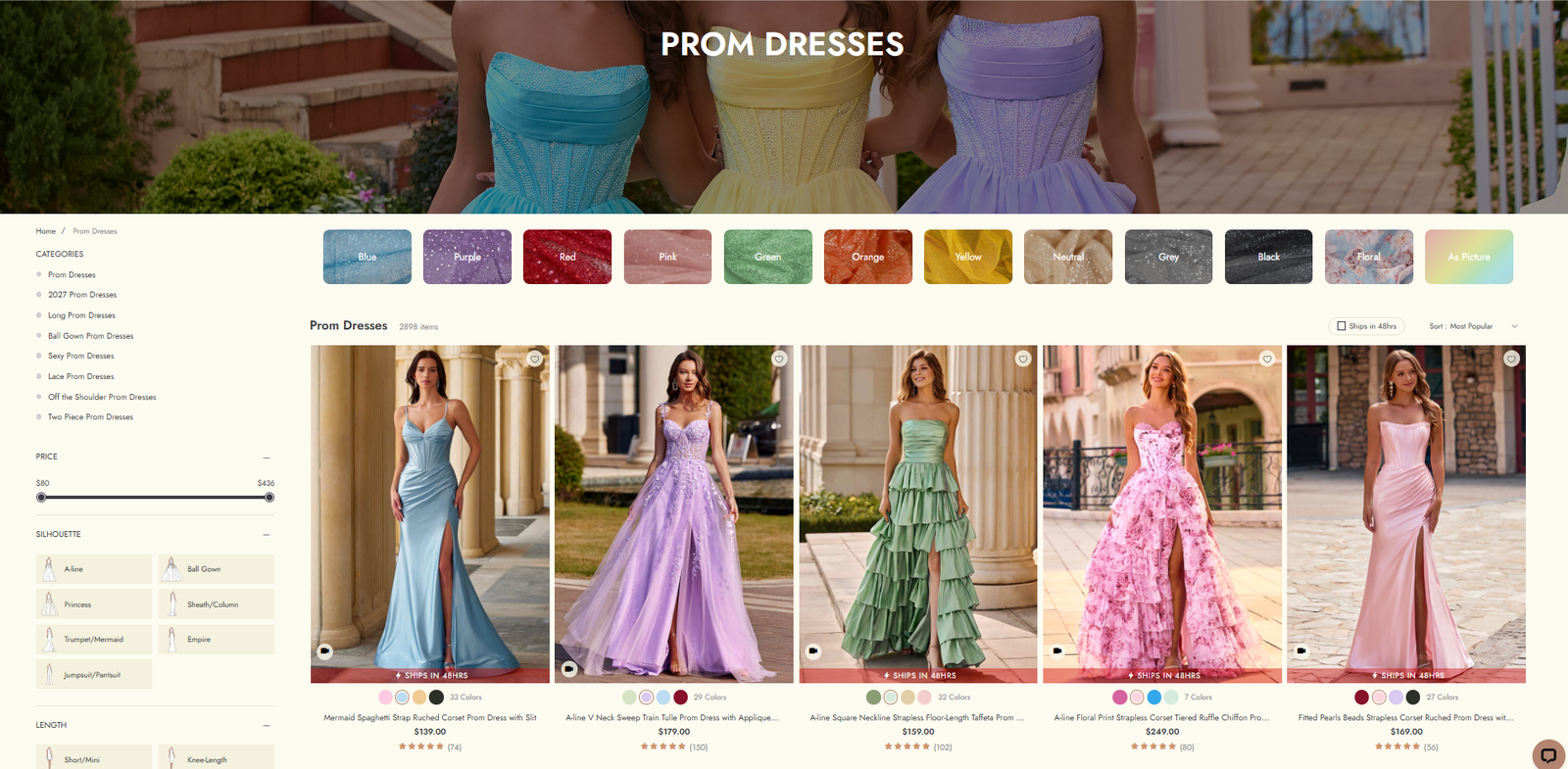
When comparing different fabrics and silhouettes, browsing the prom dresses collection can help you see how satin, chiffon, tulle, and sequin options actually appear in finished styles, rather than imagining what a fabric “should” look like on its own. STACEES’s prom collection covers major silhouettes such as A-line, ball gown, mermaid, and sheath, along with different lengths and levels of embellishment, making it a useful starting point for side-by-side comparison.
Online, the Size Chart Matters More Than Your Usual Size
Choosing a size for a formal dress is different from buying everyday clothes. Everyday sizes already vary somewhat from brand to brand, and prom dresses add corset structure, lining layers, and skirt length—the same “size 6” can fit very differently on two different dresses.
You need to measure three basic figures: bust, waist, and hips. For the bust, measure the fullest part of the chest and keep the tape level. For the waist, measure the narrowest part of the torso, usually above the navel. For the hips, measure the fullest part of the hips, roughly seven to nine inches below the waist. Wear the underwear you plan to pair with the dress, do not measure over outer clothing, and do not pull the tape too tight or too loose.
Once you have those numbers, check the size chart for the specific prom dresses you are considering rather than the store’s general size chart. If the three measurements fall into different size ranges, usually go with the largest measurement and adjust the other areas through alterations. If the difference between waist and hips makes a direct match difficult, you can consider styles with a lace-up back or adjustable design, but do not assume “alterations can fix everything”—some complex skirt structures and decorative details limit how much can be adjusted.
Another easily overlooked variable is heel height. Skirt length is set at a specific heel height. If you try on the dress in flats and then wear a five-centimeter heel to the event, the hem may go from “just touching the floor” to “hovering above the ankle.” Before finalizing the length, put on the shoes you plan to wear, stand straight, and then check the position of the front and back hems.
During a Try-On, You Need to Move, Not Just Look
The mirror and the camera only tell you what the dress looks like when you are still. What you really need to test is how it behaves in motion.
A practical sequence is this: first, sit down and stay fully seated in a chair for at least a minute. Notice whether the waistline and the lower edge of the bodice press into you, and whether the zipper or lacing pushes outward in a seated position. Then stand up, raise both arms overhead, and stretch them forward and out to the sides. Watch whether the straps, neckline, and back shift, and whether the underarms feel constrained. Next, walk at a normal pace for some distance and go up or down a few steps if possible. Check whether the skirt allows your stride, whether the front hem catches the toe of your shoe, and whether the slit opens to a degree you are comfortable with when you step. Finally, do a simple turn and a slight bounce to simulate basic dance-floor movement.
If any of these actions make you constantly adjust the dress, hold your breath, or look down at the hem, the problem will not disappear on the night of the event. Fix what needs fixing during the try-on; it is far more relaxed than dealing with it on the day itself.
There is also a low-cost but effective step: ask someone to take a photo or a short video from several feet away. Not a close-up selfie, but a view of the overall silhouette and proportions from a normal viewing distance. Photos reveal details that are easy to miss in front of a mirror—for example, whether the hem looks sloppy from a certain angle or whether the neckline shifts away from its intended position during movement.
Final Advice
A suitable prom dress is one that does not require you to constantly divert your attention at any of three levels: silhouette, fabric, and fit. The silhouette gives you the freedom of movement you need, the fabric performs consistently under lights, on camera, and in motion, the size is based on measurements rather than a habitual number, and the try-on is judged by movement rather than static appearance.
Doing these checks in advance does not reduce the pleasure of choosing a dress. It simply moves the uncertainty from the night of the event to the shopping stage—when you still have time to compare, adjust, and decide calmly.
 Admin