

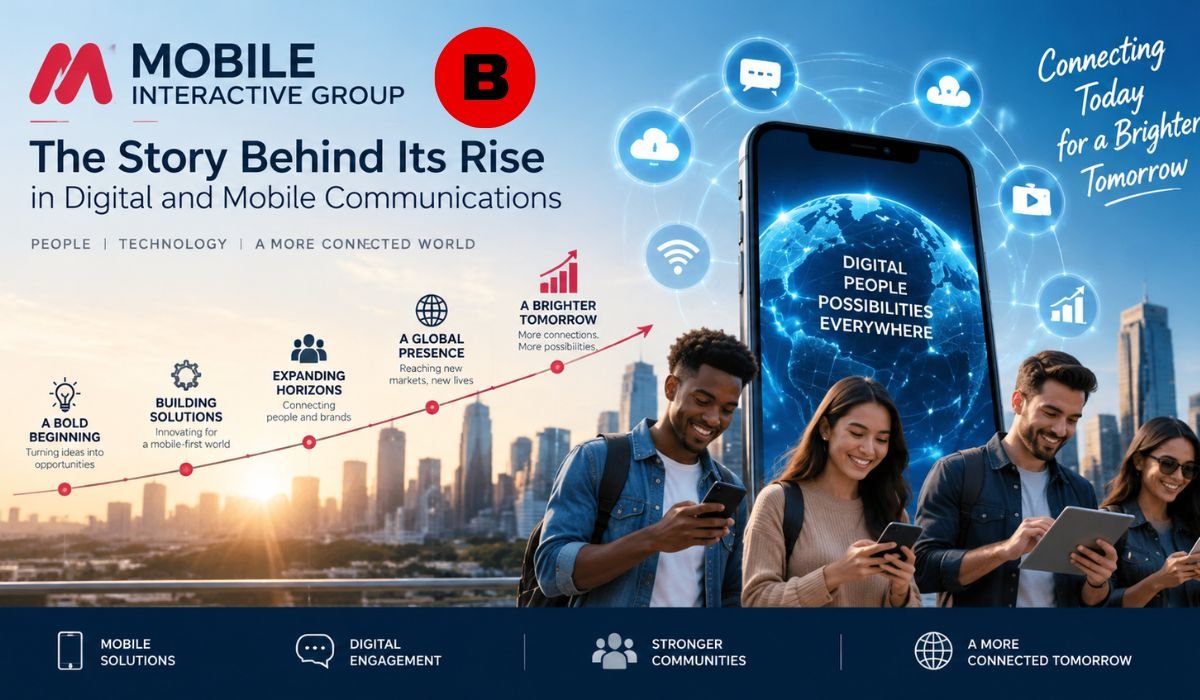
Introduction: The Story of Mobile Interactive Group
Long before smartphones became central to everyday life, businesses were already looking for better ways to use mobile technology for marketing, commerce, payments, entertainment, and customer engagement. Mobile Interactive Group (MIG) was one of the companies that built its business around that transformation.
Based in the UK, Mobile Interactive Group developed a broad portfolio covering mobile marketing, mobile commerce, billing, messaging, advertising, and digital technology. By 2011, the company had grown into a sizeable international business, with more than 300 enterprise customers and operations in several countries. Velti, which acquired MIG that year, described it as the UK’s largest mobile marketing company at the time.
What makes the story particularly interesting is the way MIG expanded. It wasn’t built around a single product or service. Instead, the company broadened its capabilities through technology development and acquisitions, including Piri, Golden Bytes, and Zaypay. The Zaypay deal was especially notable because it strengthened MIG’s position in mobile payments and international micropayments.
What Was Mobile Interactive Group?
Mobile Interactive Group was a British mobile and digital technology company whose business extended across mobile communications, marketing, commerce, billing, and related digital services.
The company’s UK corporate record shows that Mobile Interactive Group Limited was incorporated on February 20, 2003. Its registered business activities included wireless telecommunications, information technology services, and data processing and hosting.
During its most active period, however, MIG offered considerably more than those formal classifications suggest. The company worked across mobile marketing, messaging, mobile billing, mobile commerce, advertising, applications, and digital technology.
That broad offering made MIG an attractive technology partner for businesses looking to communicate with customers through mobile devices or create new digital experiences. By the time Velti announced its acquisition in November 2011, MIG’s platform was being used by more than 300 enterprise customers. Those customers included major names such as Skype, Vodafone, O2, PepsiCo, ITV, BBC, Sony, Barclaycard, Marks & Spencer, and New Look.
The Early Journey of Mobile Interactive Group
Mobile Interactive Group emerged during a period when mobile phones were changing rapidly. Text messaging had become a powerful communication channel, mobile websites were beginning to gain traction, and businesses were exploring ways to use phones for advertising, commerce, entertainment, and customer interaction.
The company’s formal UK corporate history begins in 2003. Barry Houlihan was one of the company’s early directors and later became closely associated with MIG’s leadership and expansion. Companies House records show that he was appointed as a director when the company was incorporated and later served again as a director from 2004 until 2013.
Rather than remaining focused on one corner of the mobile market, MIG expanded as new opportunities emerged. Its strategy increasingly brought together communications, marketing, commerce, technology, and digital engagement.
That broad approach would become particularly important as mobile devices evolved from simple communication tools into platforms for transactions and digital experiences.
Mobile Interactive Group’s Business Model and Vision
At the heart of Mobile Interactive Group’s strategy was integration. The company sought to connect mobile messaging, marketing, commerce, billing, and digital experiences rather than treating each one as a completely separate service.
Its acquisition strategy reflected that philosophy. In June 2010, MIG acquired mobile marketing and CRM provider Piri Limited. The following year, it announced the acquisition of Golden Bytes International, a mobile technology, services, and marketing company. MIG said these transactions helped broaden its technology and services offering across the mobile services value chain and accelerated the international reach of its products.
This wasn’t simply expansion for expansion’s sake. Each acquisition added another capability to a business that was trying to cover more of the mobile customer journey.
That approach became even clearer when MIG turned its attention to mobile payments.
Why Mobile Monetization Became Important
Mobile monetization was becoming an increasingly important part of the digital economy. As more people used phones to access websites, games, applications, and digital services, businesses needed practical ways to turn that engagement into revenue.
Micropayments were particularly interesting. Many digital products involved relatively small transactions, and conventional payment systems weren’t always designed around that type of purchase.
MIG’s acquisition of Zaypay demonstrated how seriously it was taking the opportunity. Zaypay, a Netherlands-based mobile payments business, provided technology that allowed developers and businesses to process international micropayments using methods such as SMS, phone calls, in-app payments, and other alternative payment channels. At the time, the service was operating in 44 countries.
For MIG, the acquisition added a specialized payment capability to a business that already had expertise in mobile communications, marketing, commerce, and digital technology.
Mobile Interactive Group and the Developer Community
Developers became an increasingly important part of MIG’s strategy, particularly when the company acquired Zaypay.
MIG CEO and founder Barry Houlihan said the company viewed developers as a driving force in the industry. He described Zaypay as a platform built by developers for developers and said MIG wanted to build stronger relationships with that community.
The goal was to make payment technology easier to use across different platforms while helping developers monetize their products internationally. For a developer serving customers in several countries, payments could be complicated because different markets often have different systems and preferences.
Zaypay gave MIG a way to address part of that problem. Its technology was designed to support international micropayments, giving developers another route to monetize websites, applications, games, and other digital products.
The Role of Technology in MIG’s Growth
Technology was central to Mobile Interactive Group’s growth. The company wasn’t simply selling advertising space or managing messaging campaigns; it was developing and deploying technology that allowed businesses to create mobile experiences and commercial interactions.
One example was MIG’s work with New Look. The company developed a transactional mobile commerce site for the retailer, illustrating how MIG’s capabilities could extend from marketing into actual commerce. The project was part of a broader movement toward making mobile devices useful for browsing products and completing transactions.
MIG also developed mobile interactive technology for broadcasters in Europe and the Asia-Pacific region. These systems supported real-time social media interactions through mobile platforms, connecting broadcast content with audience participation.
That combination of technology and engagement helps explain MIG’s position in the market. It was working at a point where mobile marketing, social interaction, commerce, and digital services were beginning to overlap.
Mobile Interactive Group’s Expansion Strategy
MIG expanded through a mixture of internal development and acquisitions. The purchase of Piri in 2010 strengthened its mobile marketing and CRM capabilities. The acquisition of Golden Bytes in 2011 broadened its mobile technology and services offering, particularly across European markets.
Then came Zaypay.
The pattern is revealing. Rather than acquiring unrelated businesses, MIG was assembling complementary capabilities that could fit into its wider mobile technology strategy. Marketing, CRM, mobile technology, commerce, and payments could all serve the same basic goal: helping businesses reach customers and generate value through mobile channels.
By the time Velti acquired MIG later in 2011, the company had operations in the UK, US, Netherlands, Belgium, and Australia, while its services reached 44 countries.
Mobile Interactive Group Acquires Zaypay
One of the defining moments in the history of Mobile Interactive Group came in 2011, when it acquired Zaypay, a mobile payments company based in the Netherlands.
MIG announced the acquisition in September 2011. Contemporary reporting said the transaction had actually closed in August. The purchase was an all-cash deal, although the financial terms weren’t disclosed. MIG also said Zaypay would continue operating as a standalone business.
Zaypay had launched in 2006 and had developed technology designed to help businesses and developers process small international payments. Its platform supported several payment methods and had already established a customer base across multiple markets.
For MIG, the acquisition was therefore about more than simply adding another company to its portfolio. It gave the group a stronger foothold in the infrastructure behind digital monetization.
Why Did Mobile Interactive Group Acquire Zaypay?
The reasoning behind the transaction was closely tied to MIG’s wider vision.
Barry Houlihan said MIG wanted to build a one-stop shop for online and mobile monetization solutions serving merchants, online billing providers, and developers around the world.
Zaypay fitted neatly into that plan. MIG already had capabilities in mobile marketing, communications, commerce, and digital technology. Zaypay brought specialized expertise in micropayments.
The deal also supported MIG’s growing focus on developers. Digital products were increasingly being distributed across borders, and developers needed payment systems capable of supporting users in different countries.
In that context, Zaypay wasn’t simply another acquisition. It represented an important step toward connecting mobile engagement with revenue generation.
Zaypay’s Five-Year Journey Before the Acquisition
Zaypay already had a meaningful operating history before MIG acquired it. The company launched in 2006 and was described by MIG as a profitable mobile micropayments business serving several hundred global customers through a single platform.
Contemporary reporting identified Dutch entrepreneur Adriaan Mol as Zaypay’s founder. Its technology enabled third-party developers to process international micropayments through SMS, phone calls, in-app transactions, and other payment methods.
That background made Zaypay a natural fit for MIG. Rather than building an international micropayments operation from the ground up, MIG was acquiring a business that already had specialized technology and experience in the field.
For Zaypay, meanwhile, joining MIG offered the opportunity to take an established product into a larger international business environment.
What Happened to Zaypay After the Acquisition?
MIG said Zaypay would continue to operate as a standalone business following the acquisition. That suggests the company saw value in preserving Zaypay’s existing operation while giving it access to MIG’s wider resources and international strategy.
But the independent story of Mobile Interactive Group changed soon afterward.
On November 15, 2011, Velti announced that it had acquired MIG. The deal called for $20 million in cash at closing as part of a minimum $25 million consideration, with up to another $34 million potentially payable based on MIG’s performance through 2013. The maximum potential consideration was therefore approximately $59 million.
The acquisition was significant enough to attract regulatory attention in the UK. The Office of Fair Trading later recorded the completed acquisition and determined that it didn’t qualify for investigation under the UK’s merger provisions because the relevant turnover and share-of-supply tests weren’t met.
Mobile Interactive Group’s Growth Before the Velti Acquisition
By the time Velti acquired MIG, the company had reached considerable scale.
Velti’s acquisition announcement reported that MIG had generated more than $100 million in gross billings and more than $20 million in net revenue during 2010. The company had more than 160 employees and served more than 300 enterprise customers.
Its customer list included major brands and organizations such as Skype, Vodafone, O2, PepsiCo, ITV, BBC, Sony, Barclaycard, Marks & Spencer, and New Look. MIG’s technology was also being used by broadcasters in Europe and the Asia-Pacific region for real-time mobile and social-media interactions.
The figures help put MIG’s later acquisition into perspective. This wasn’t a small startup being absorbed before it had found a market. It had developed a substantial customer base, an international footprint, and a technology portfolio broad enough to attract one of the industry’s major players.
What Made Mobile Interactive Group’s Approach Different?
MIG’s strongest characteristic was the breadth of its offering.
The company operated across Mobile Marketing, Mobile Commerce, Mobile Billing, Messaging, Advertising, Applications, and Digital Experiences. Instead of concentrating exclusively on one channel, it tried to connect several parts of the mobile ecosystem.
Its international reach was another important factor. By 2011, MIG said it was providing mobile marketing, commerce, and billing services in 44 countries, with operations across five countries.
That model reflected a major shift in the industry. Mobile was no longer simply another place to send a marketing message. It was becoming a platform through which consumers could communicate, discover products, interact with brands, participate in media, and make purchases.
MIG’s business was built around that convergence.
Mobile Interactive Group and the Changing Digital Economy
The history of Mobile Interactive Group is easier to understand when viewed against the wider evolution of the digital economy.
During MIG’s growth years, businesses were moving toward mobile websites, applications, social media, digital advertising, and mobile commerce. At the same time, developers were creating products designed to reach users across national borders.
MIG operated directly within that transition.
Its work with broadcasters showed how mobile devices could turn passive audiences into active participants. Its mobile commerce projects demonstrated how phones could become shopping tools. And the Zaypay acquisition showed how payment infrastructure could help turn digital engagement into revenue.
The technology of the period was very different from today’s smartphone ecosystem, but the underlying business idea remains familiar: mobile devices were becoming a bridge between communication, content, commerce, and customer relationships.
For readers researching Mobile Interactive Group today, its corporate history is especially important. Companies House records show that Mobile Interactive Group Limited was ultimately dissolved on April 7, 2015.
That means the company should be understood as a historical business rather than an independent mobile technology company still operating today.
What Happened to Mobile Interactive Group?
The short answer is that Mobile Interactive Group ceased to exist as an independent business after Velti acquired it in 2011.
Velti said the acquisition would strengthen its position in mobile marketing by adding MIG’s technology, customers, international presence, and management expertise. MIG’s management was expected to join Velti’s global management team, while the business would continue operating within the larger organization.
The acquisition was completed and subsequently recognized by UK competition authorities.
The UK corporate record provides the longer-term picture. Mobile Interactive Group Limited was eventually dissolved in April 2015.
So, while the MIG name belongs to an earlier era of the mobile industry, its story didn’t simply end with the Zaypay acquisition. Instead, the company became part of a larger mobile marketing organization before its original corporate entity was eventually dissolved.
Lessons From Mobile Interactive Group’s Business Strategy
Mobile Interactive Group’s history offers a useful look at how the mobile technology industry developed.
One of the clearest lessons is that mobile technology was becoming increasingly interconnected. Marketing, messaging, commerce, payments, social interaction, and customer engagement were no longer isolated areas. A company that could connect several of them had the potential to offer something more valuable to large businesses.
MIG’s acquisition strategy illustrates that point particularly well. Piri strengthened its mobile marketing and CRM capabilities, Golden Bytes expanded its mobile technology and international reach, and Zaypay brought specialized micropayment expertise into the group.
The company’s focus on developers was also forward-looking. As applications, online services, and other digital products became increasingly important, developers needed practical ways to reach customers and monetize their work across borders.
At the same time, MIG’s history shows how quickly technology markets can consolidate. The company expanded rapidly, built an international operation, and acquired Zaypay—only to be acquired by Velti itself later in the same year.
That’s part of what makes the story valuable. It isn’t simply the history of one mobile marketing company. It’s a snapshot of an industry moving rapidly toward the interconnected digital economy that would follow.
Final Thoughts
The story of Mobile Interactive Group captures a fascinating period in the development of mobile technology.
The company grew at a time when mobile phones were rapidly evolving from communication devices into platforms for marketing, commerce, entertainment, social interaction, and payments. MIG recognized that shift and built a business around connecting many of those functions.
Its acquisitions tell much of the story. Piri strengthened mobile marketing and CRM. Golden Bytes expanded its technology and international capabilities. Zaypay added specialized expertise in mobile micropayments and digital monetization.
The Zaypay deal was particularly significant because it showed MIG’s ambition to help merchants, billing providers, and developers monetize digital products internationally. Yet the timing also makes the acquisition notable: only a few months later, MIG itself became part of Velti.
By the time of that acquisition, MIG had more than $100 million in gross billings, more than $20 million in 2010 net revenue, more than 160 employees, and more than 300 enterprise customers.
Today, Mobile Interactive Group is best understood as a historical mobile technology and communications company, not an active independent business. Its corporate record confirms its long development through the 2000s and early 2010s before its eventual dissolution in 2015.
What remains interesting about MIG is the direction it was taking. Its strategy anticipated several ideas that would become central to the digital economy: mobile-first experiences, developer platforms, digital commerce, micropayments, social engagement, and integrated technology services.
In that sense, the history of Mobile Interactive Group isn’t just a story about a company that once operated in mobile marketing. It’s a snapshot of the moment when the mobile phone began evolving into something much bigger—a gateway connecting communication, content, commerce, and the wider digital world.
Frequently Asked Questions About Mobile Interactive Group
What Was Mobile Interactive Group?
Mobile Interactive Group was a UK-based mobile and digital technology company. Its business covered mobile marketing, messaging, billing, mobile commerce, advertising, applications, and other digital services.
When Was Mobile Interactive Group Founded?
Mobile Interactive Group Limited was incorporated in the UK on February 20, 2003, according to Companies House records.
Who Was the Founder of Mobile Interactive Group?
Barry Houlihan was closely associated with Mobile Interactive Group’s founding and growth. Companies House records show that he was appointed as a director on February 20, 2003, and later served again as a director from April 2004 until August 2013. Velti’s 2011 announcement also identified him as MIG’s CEO and founder.
What Did Mobile Interactive Group Do?
MIG provided mobile marketing, mobile commerce, mobile billing, messaging, advertising, and digital technology services. Its technology was used by more than 300 enterprise customers across a range of industries and markets.
When Did Mobile Interactive Group Acquire Zaypay?
MIG announced the Zaypay acquisition in September 2011. Contemporary reporting said the transaction had closed in August 2011. It was an all-cash deal, but the purchase price wasn’t disclosed.
What Was Zaypay?
Zaypay was a Netherlands-based mobile micropayments company founded in 2006. Its technology allowed developers and businesses to process international micropayments using methods including SMS, phone calls, in-app payments, and other alternative payment options.
Did Mobile Interactive Group Get Acquired?
Yes. Velti announced the acquisition of Mobile Interactive Group on November 15, 2011. The deal included $20 million in cash at closing, a minimum total consideration of $25 million, and the potential for up to another $34 million based on performance.
Is Mobile Interactive Group Still Operating?
No, not as an independent company. MIG became part of Velti following the 2011 acquisition, while the UK Companies House record for Mobile Interactive Group Limited shows that the company was ultimately dissolved on April 7, 2015.
Learn more and explore exciting content on: Roman Krause: Inside the Private Life of Peter Krause’s Son
 IQ newswire
  Sky Bloom IT