

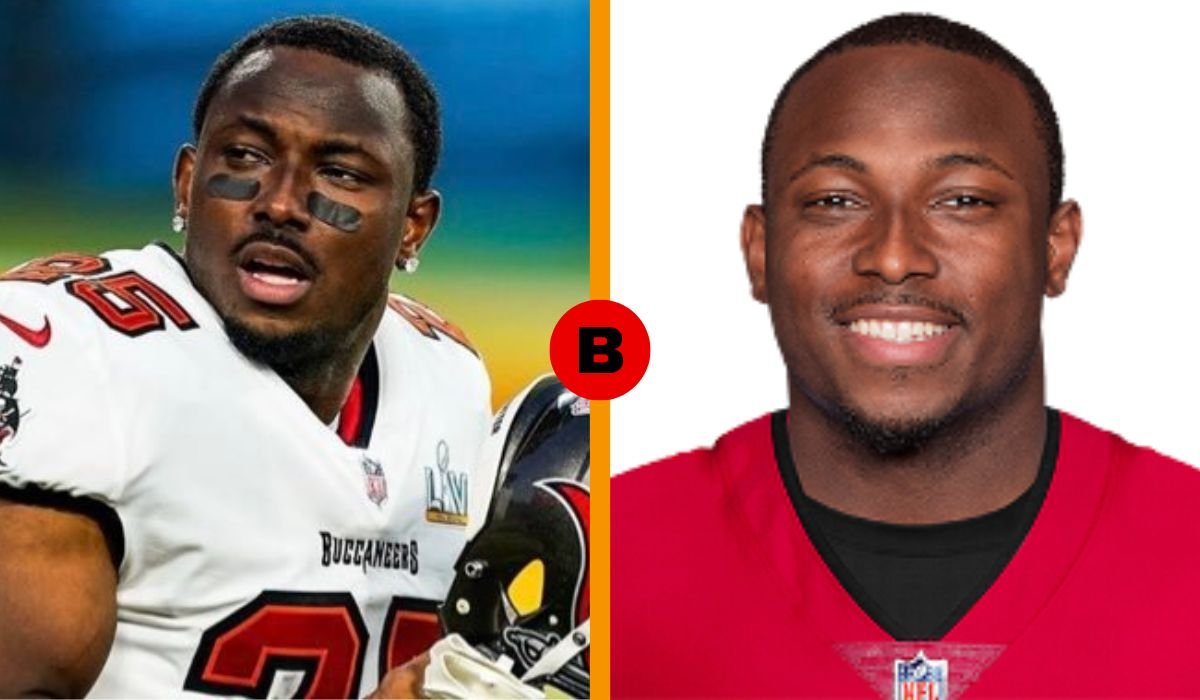
For Philadelphia Eagles fans who watched LeSean McCoy at his best, the highlights are easy to remember. A defender would appear to have him cornered, McCoy would plant his foot, change direction, and suddenly find open field. That combination of patience, balance, acceleration, and creativity helped turn “Shady” into one of the NFL’s most recognizable running backs.
McCoy’s story, however, is bigger than a collection of spectacular runs. Over 12 NFL seasons, he developed from a promising Pennsylvania prospect into the Philadelphia Eagles’ all-time leading rusher. He earned six Pro Bowl selections, received first-team All-Pro honors twice, and eventually collected two Super Bowl rings.
His career also took him well beyond Philadelphia. McCoy enjoyed several productive seasons with the Buffalo Bills before finishing his playing days with the Kansas City Chiefs and Tampa Bay Buccaneers.
Football remained part of his life after retirement. McCoy moved into sports media, where his willingness to speak openly about players, coaches, and teams gave him another platform.
That connection to the game—and particularly to Philadelphia—was evident again in October 2026 when McCoy defended Eagles head coach Nick Sirianni against criticism from some frustrated supporters.
From his early years in Harrisburg to his Eagles records and Super Bowl championships, here’s a closer look at LeSean McCoy’s NFL career, Philadelphia legacy, career statistics, achievements, and life after football.
LeSean McCoy Quick Bio Information
| Information | Details |
|---|---|
| Full Name | LeSean Kamel McCoy |
| Popular Name | LeSean McCoy |
| Nickname | Shady |
| Date of Birth | July 12, 1988 |
| Age in 2026 | 38 Years |
| Birthplace | Harrisburg, Pennsylvania, USA |
| Nationality | American |
| Profession | Former NFL Running Back, Sports Commentator |
| Playing Position | Running Back |
| Listed Height | 5 Feet 11 Inches |
| College | University of Pittsburgh |
| NFL Draft Year | 2009 |
| Draft Selection | Second Round, 53rd Overall |
| NFL Career | 2009–2020 |
| NFL Teams | Eagles, Bills, Chiefs, Buccaneers |
| Career Rushing Yards | 11,102 |
| Career Rushing Touchdowns | 73 |
| Pro Bowl Selections | 6 |
| Super Bowl Championships | 2 |
| Retirement Year | 2021 |
Who Is LeSean McCoy?
LeSean Kamel McCoy is a former NFL running back who made his name primarily with the Philadelphia Eagles and Buffalo Bills. During his prime, few runners were as difficult to bring down in open space. McCoy could hesitate behind his blockers, cut sharply in another direction, and accelerate before a defender had time to recover.
Philadelphia selected him in the second round of the 2009 NFL Draft after his college career at Pittsburgh. McCoy spent his first six NFL seasons with the Eagles and became the franchise’s career rushing leader before being traded to Buffalo in 2015.
His later stops with Kansas City and Tampa Bay produced something that had eluded him during his most statistically productive years: a Super Bowl championship. In fact, he won two in consecutive seasons.
Across 170 regular-season games, McCoy finished with 11,102 rushing yards and 3,898 receiving yards. He scored 89 total touchdowns, including 73 on the ground and 16 as a receiver.
Those numbers only tell part of the story. His six Pro Bowl appearances, two first-team All-Pro selections, and place on the NFL’s 2010s All-Decade Team provide a clearer picture of how highly his performances were regarded during his era.
LeSean McCoy’s Early Life and Football Beginnings
McCoy was born on July 12, 1988, in Harrisburg, Pennsylvania. Long before NFL audiences knew him as Shady, football was already becoming an important part of his life.
He attended Bishop McDevitt High School and developed into a highly regarded running back. Even at that stage, many of the qualities that would later define his professional career were apparent. He could accelerate quickly, make defenders miss, and create running space with his movement rather than simply trying to overpower tacklers.
The road wasn’t completely smooth. A serious ankle injury during his high school career created uncertainty at an important point in his development. McCoy nevertheless continued pursuing football and eventually worked his way toward major college competition.
His famous nickname also dates to childhood. McCoy has explained that his mother called him “Shady” because he was mischievous when he was young. The name stayed with him and eventually became almost as recognizable as LeSean itself.
Football also ran in the family. His older brother, LeRon McCoy, pursued the sport professionally.
For LeSean, the next major opportunity arrived at the University of Pittsburgh.
LeSean McCoy’s College Football Career at Pittsburgh
McCoy didn’t need much time to establish himself with the Pittsburgh Panthers. He played only two college seasons, in 2007 and 2008, but produced enough during that period to attract serious NFL attention.
As a freshman in 2007, McCoy rushed for 1,328 yards and 14 touchdowns. That immediate impact earned him Big East Rookie of the Year recognition and established him as one of the conference’s emerging stars.
His second season was even stronger.
McCoy rushed for 1,488 yards in 2008 and reached the end zone 21 times on the ground. He was named Big East Player of the Year and received second-team All-American recognition.
The production was impressive, but so was the way he accumulated those yards. McCoy already displayed the vision, patience, and quick directional changes that would later become trademarks of his NFL game.
After two seasons at Pittsburgh, there wasn’t much doubt about his next challenge. McCoy declared for the 2009 NFL Draft and took his game to the professional level.
Philadelphia Eagles Draft LeSean McCoy in 2009
Philadelphia selected McCoy with the 53rd overall pick in the second round of the 2009 NFL Draft.
He entered a backfield that already featured established running back Brian Westbrook, which meant McCoy didn’t immediately have to carry the offense. Instead, he was able to gain experience while gradually taking on a larger role.
His rookie numbers were encouraging. McCoy rushed for 637 yards and four touchdowns in 2009, offering an early glimpse of what Philadelphia had found.
The transition accelerated the following year.
In 2010, McCoy surpassed 1,000 rushing yards for the first time, finishing with 1,080. Just as importantly, he showed how useful he could be in the passing game, adding 592 receiving yards.
That versatility gave Philadelphia more ways to use him. McCoy wasn’t simply a traditional running back who needed handoffs to influence a game. He could catch the football, work in space, and force defenses to account for him on passing downs.
By 2011, he was ready to become one of the centerpieces of the Eagles’ offense.
How LeSean McCoy Became an Eagles Superstar
If there was any doubt about McCoy’s ability to become an elite NFL running back, his 2011 season largely erased it.
He rushed for 1,309 yards and an NFL-leading 17 rushing touchdowns. McCoy added another three scores as a receiver, giving him 20 total touchdowns for the season.
The performance brought his first Pro Bowl selection as well as first-team All-Pro honors.
Yet his finest rushing season was still ahead.
Playing under Chip Kelly in 2013, McCoy led the entire NFL with 1,607 rushing yards. He also produced 2,146 yards from scrimmage, setting Eagles single-season franchise records in both categories.
One game from that season became especially memorable.
Philadelphia faced the Detroit Lions in December with heavy snow covering the field. Conditions appeared difficult for almost everyone—except McCoy. He rushed for 217 yards, setting an Eagles single-game rushing record at the time and delivering one of the defining performances of his career.
By the end of 2013, McCoy had another first-team All-Pro honor and had firmly established himself among football’s premier running backs.
LeSean McCoy’s Philadelphia Eagles Legacy
McCoy’s place in Eagles history isn’t based solely on nostalgia. The numbers support it.
Across six seasons in Philadelphia, he rushed for 6,792 yards, making him the franchise’s all-time career rushing leader. He scored 44 rushing touchdowns as an Eagle and earned three Pro Bowl selections while playing for the organization.
His two first-team All-Pro selections also came during his Philadelphia years.
Still, statistics don’t completely explain why McCoy became such a memorable player for Eagles supporters.
His style was unpredictable in the best possible way. He could appear to be running out of space, hesitate for a fraction of a second, and then make a sharp cut that completely changed the play. Some running backs built their reputations on power. McCoy built much of his on balance, timing, vision, and the ability to make defenders miss.
His relationship with Philadelphia also survived his departure from the team.
In 2024, the Eagles inducted McCoy into their Hall of Fame, formally recognizing his contribution to the franchise.
By then, his status was clear: whatever uniforms he wore later, McCoy’s football identity would always be closely tied to Philadelphia.
Why Did the Eagles Trade LeSean McCoy?
That’s partly why the events of March 2015 came as such a surprise.
The Eagles agreed to trade McCoy to the Buffalo Bills in exchange for linebacker Kiko Alonso. For Philadelphia supporters accustomed to watching McCoy lead the backfield, the move was difficult to ignore.
The transaction took place while Chip Kelly was reshaping the Eagles’ roster. Salary considerations and Kelly’s broader personnel decisions formed part of the context surrounding McCoy’s departure.
What made the trade particularly striking was its timing. McCoy wasn’t an aging player hanging on at the end of his career. He had rushed for 1,319 yards in 2014, his final season with Philadelphia.
Leaving the Eagles therefore didn’t signal the end of his productive years.
Instead, McCoy headed to Buffalo with an opportunity to prove that his success could continue in a different offense, under different coaches, and in a different NFL city.
LeSean McCoy’s Buffalo Bills Career
McCoy spent four seasons with Buffalo, playing for the Bills from 2015 through 2018.
His first year required some adjustment, but he remained productive enough to earn a Pro Bowl selection. He followed that with one of his strongest post-Philadelphia seasons in 2016, rushing for 1,267 yards and 13 touchdowns.
McCoy was selected to the Pro Bowl in each of his first three seasons with Buffalo, giving him six career selections when combined with the three he earned as an Eagle.
His time in western New York also included an important moment in Bills history.
Buffalo reached the postseason following the 2017 regular season, ending a playoff drought that had lasted 17 years. McCoy was a central part of the offense that helped the franchise return to January football.
He also passed 10,000 career rushing yards during his Bills tenure.
By succeeding in Buffalo, McCoy added another layer to his legacy. His best years weren’t simply the product of one team or one offensive system. He remained a high-level NFL running back after leaving Philadelphia.
LeSean McCoy’s Two Super Bowl Championships
The final stage of McCoy’s career looked very different from his peak seasons. His individual workload declined, but team success finally arrived.
McCoy joined the Kansas City Chiefs for the 2019 season. His role wasn’t comparable to the one he’d held in Philadelphia or Buffalo, yet he contributed during the regular season as Kansas City built toward a championship run.
The Chiefs eventually defeated the San Francisco 49ers in Super Bowl LIV, giving McCoy the first Super Bowl ring of his career.
Then came an unusual twist.
McCoy joined the Tampa Bay Buccaneers in 2020, where he became part of a roster led by Tom Brady. Tampa Bay reached Super Bowl LV—and faced McCoy’s former team, the Chiefs.
The Buccaneers won, giving McCoy a second championship ring in consecutive seasons.
It’s important to put those titles in proper context. McCoy wasn’t a featured player in either Super Bowl game, and his greatest individual accomplishments had come years earlier.
Still, the championships provided a fitting final chapter. After spending most of his career compiling impressive individual numbers, McCoy retired as a two-time Super Bowl champion.
LeSean McCoy’s NFL Career Stats and Achievements
By the time his playing days were over, McCoy had assembled a résumé that stood comfortably among the strongest running backs of his generation.
In 170 regular-season games, he carried the football 2,457 times for 11,102 yards. That works out to roughly 4.5 yards per rushing attempt.
His contribution didn’t stop there.
McCoy caught 518 passes for another 3,898 yards. Add his rushing and receiving totals together, and he finished with exactly 15,000 yards from scrimmage.
He scored 73 rushing touchdowns and 16 receiving touchdowns, producing 89 total offensive scores.
The honors were equally notable. McCoy was selected to six Pro Bowls, twice earned first-team All-Pro recognition, led the NFL in rushing yards in 2013, and led the league in rushing touchdowns in 2011.
His place on the NFL’s 2010s All-Decade Team offered perhaps the clearest recognition of his sustained excellence.
Rather than shining briefly and disappearing, McCoy remained relevant across much of an entire decade.
Why LeSean McCoy Was One of the Best Running Backs of the 2010s
Watching McCoy at his peak made it clear that he didn’t run like everyone else.
He was exceptionally comfortable changing direction. Instead of immediately attacking whatever opening appeared in front of him, he often allowed a play to develop, waited for his blockers, and then accelerated through the lane he wanted.
That patience occasionally made his running style look risky, but it was also what made him so difficult to defend.
McCoy could turn a broken play into positive yardage because he rarely seemed trapped by the original design of the run. His balance and lateral movement gave him options other backs didn’t always have.
He was also a capable receiver, an increasingly important quality for running backs as NFL offenses became more dependent on versatile personnel.
Most importantly, McCoy sustained his production.
Being selected to the NFL’s 2010s All-Decade Team placed him among players whose impact was felt across an era, rather than those remembered primarily for a single outstanding season.
LeSean McCoy’s Retirement and Life After Football
McCoy’s NFL journey officially came to an end on October 1, 2021.
Rather than simply announcing his retirement away from the organization where his career began, he signed a one-day contract with the Eagles and retired as a member of the franchise.
It was an appropriate ending to a relationship that had survived a surprising trade six years earlier.
Retirement didn’t take McCoy away from football for long.
He joined FOX Sports in September 2022 and moved into television analysis, where his experience as a former player gave him a natural perspective on the league.
McCoy later became a co-host of FS1’s The Facility alongside Emmanuel Acho, James Jones, and Chase Daniel. The daily sports discussion program was eventually canceled in July 2025, so it shouldn’t be confused with his current employment in 2026.
He has also been involved with The 25/10 Show, a football-focused podcast connected with his former Eagles teammate DeSean Jackson.
The transition suited McCoy’s personality. During his playing career, he was rarely short of confidence. In media, that willingness to express an opinion became part of his appeal.
LeSean McCoy Defends Nick Sirianni in October 2026
McCoy’s continuing attachment to Philadelphia became particularly visible in October 2026.
With Eagles head coach Nick Sirianni facing criticism from a segment of frustrated supporters, McCoy publicly pushed back against calls for a coaching change.
Speaking with TMZ Sports at Los Angeles International Airport, he questioned why Sirianni should be considered on the hot seat given the coach’s championship success and postseason record.
McCoy’s argument centered on perspective. In his view, expectations surrounding the Eagles are so high that results considered acceptable elsewhere can quickly become a source of controversy in Philadelphia.
His comments came amid criticism of the Eagles’ early 2026 performances, including a reported loss to the Los Angeles Rams in which Philadelphia surrendered a halftime advantage.
There’s an important distinction here: McCoy never played for Sirianni. The coach took charge of the Eagles in 2021, years after McCoy’s final season in Philadelphia.
McCoy was therefore speaking not as a former Sirianni player, but as an Eagles great familiar with the expectations surrounding the organization.
That makes the episode interesting beyond the immediate coaching debate. McCoy spent years experiencing Philadelphia’s football culture firsthand, and his comments reflected his belief that short-term disappointment shouldn’t erase a coach’s larger body of work.
LeSean McCoy’s Hall of Fame Case and Lasting Impact
Any discussion of McCoy’s career eventually leads to another question: How should football history remember him?
His résumé provides a compelling starting point.
McCoy surpassed 11,000 career rushing yards, made six Pro Bowls, earned two first-team All-Pro selections, and was chosen for the NFL’s 2010s All-Decade Team. He also finished his career with two Super Bowl rings, although those championships came after his years as a featured running back.
The Pro Football Hall of Fame question is more complicated.
Selection is highly competitive, particularly when voters compare players from different eras and evaluate running backs whose careers unfolded as the position itself was changing.
McCoy’s strongest case rests less on his championship rings than on his sustained individual excellence. During his prime, he wasn’t simply accumulating carries. He was one of the NFL’s most productive and distinctive offensive players.
Whatever happens with future Hall of Fame consideration, Philadelphia has already made its judgment about his place in franchise history.
His 2024 induction into the Eagles Hall of Fame ensures that the organization will permanently recognize the player who still stands as its career rushing leader.
Final Thoughts
LeSean McCoy’s NFL career is difficult to summarize with one statistic or one memorable game.
The numbers are certainly impressive. He rushed for 11,102 yards, produced exactly 15,000 yards from scrimmage, made six Pro Bowls, earned two first-team All-Pro selections, and finished his career with two Super Bowl rings.
Yet his legacy is also tied to how he played.
At his best, McCoy made running the football look unpredictable. His hesitation, sudden cuts, acceleration, and ability to create something from a collapsing play gave him a style that was immediately recognizable.
Philadelphia saw the best of it.
The Eagles drafted him in 2009, watched him develop into one of football’s elite running backs, and eventually saw him become the franchise’s career rushing leader. Even a surprising trade couldn’t permanently separate McCoy from the organization. He returned to retire as an Eagle in 2021 and entered the team’s Hall of Fame three years later.
Life after football has kept him close to the sport. Broadcasting, podcasting, and regular commentary have given McCoy a different way to participate in NFL conversations.
His October 2026 defense of Nick Sirianni offered another reminder of that connection. Years after carrying the football at Lincoln Financial Field, McCoy still has plenty to say about the franchise that helped make “Shady” one of the defining running backs of his generation.
For Eagles fans, he’s part of the organization’s history. For the wider NFL audience, LeSean McCoy remains a compelling example of how sustained production, an unmistakable playing style, and a strong connection to a franchise can create a legacy that lasts well beyond the final snap.
FAQs About LeSean McCoy
How Old Is LeSean McCoy in 2026?
LeSean McCoy was born on July 12, 1988, in Harrisburg, Pennsylvania. He turned 38 in July 2026. His NFL career began when Philadelphia drafted him in 2009 and officially ended with his retirement in 2021.
Why Is LeSean McCoy Called Shady?
The nickname dates back to McCoy’s childhood. He has explained that his mother called him “Shady” because he was mischievous when he was young. The nickname followed him into football and became closely associated with his public identity.
How Many Super Bowls Did LeSean McCoy Win?
LeSean McCoy won two Super Bowl championships in consecutive seasons. He earned his first ring with the Kansas City Chiefs in Super Bowl LIV and his second with the Tampa Bay Buccaneers in Super Bowl LV. He wasn’t a featured player in either championship game, but he was a member of both title-winning teams.
What NFL Teams Did LeSean McCoy Play For?
McCoy played for four NFL franchises. He spent 2009 through 2014 with the Philadelphia Eagles, played for the Buffalo Bills from 2015 through 2018, joined the Kansas City Chiefs in 2019, and finished his playing career with the Tampa Bay Buccaneers in 2020.
How Many Rushing Yards Did LeSean McCoy Have?
McCoy recorded 11,102 rushing yards during his regular-season NFL career. He added 3,898 receiving yards, giving him exactly 15,000 yards from scrimmage. He also finished with 89 total offensive touchdowns.
Is LeSean McCoy the Eagles’ All-Time Leading Rusher?
Yes. McCoy accumulated 6,792 rushing yards during his six seasons with Philadelphia, making him the Eagles’ career rushing leader. His accomplishments with the organization were further recognized when he entered the Eagles Hall of Fame in 2024.
When Did LeSean McCoy Retire?
McCoy officially retired from professional football on October 1, 2021. He signed a one-day contract with Philadelphia, allowing him to retire as an Eagle even though his final NFL season had been spent with Tampa Bay.
What Does LeSean McCoy Do After Football?
McCoy moved into sports media following his playing career. He joined FOX Sports in 2022 and later co-hosted FS1’s The Facility before the program was canceled in July 2025. He has also been involved with The 25/10 Show podcast and continues to attract attention for his commentary on the NFL and Philadelphia Eagles.
Learn more and explore exciting content on: Nick Wechsler: Biography, Age, Career, Movies, TV Shows, and Personal Life