

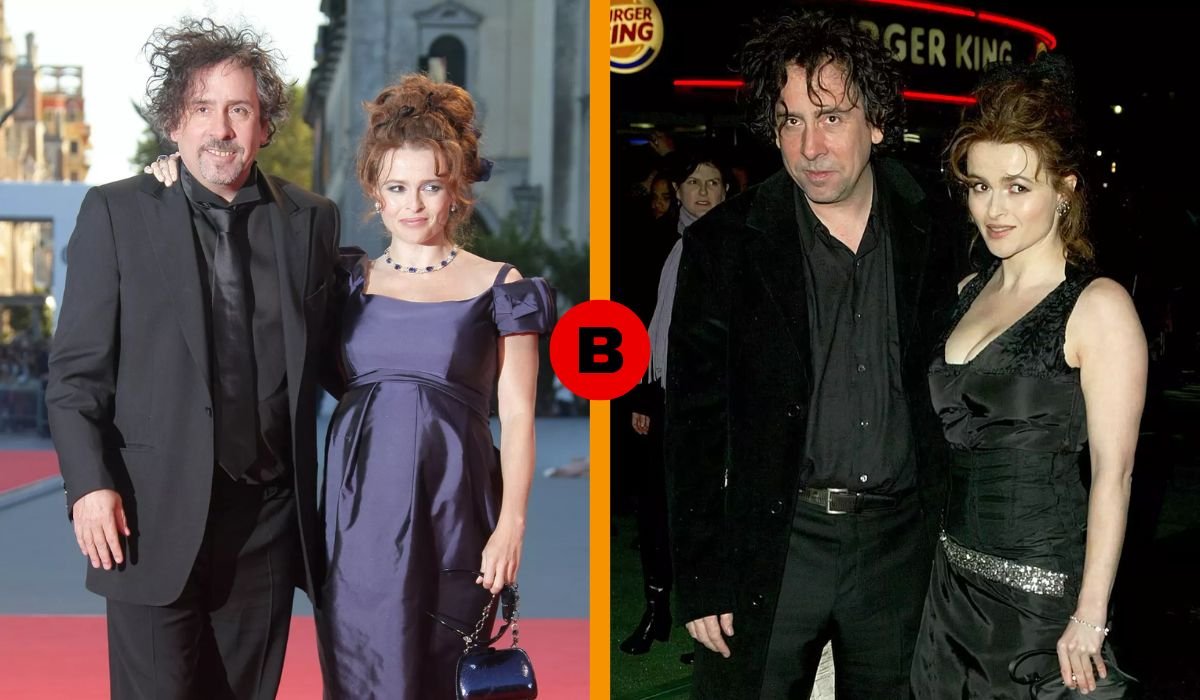
Lena Gieseke is often described simply as Tim Burton’s former wife. While that connection certainly brought her public attention, it represents only one chapter of a much broader professional story.
Gieseke has built a career across several creative and technical fields, including digital media, computer graphics, visual effects, software development, research, and higher education. Her professional journey has taken her from the visual-effects and computer-animation industry to academic research and teaching.
Today, Film University Babelsberg KONRAD WOLF lists Gieseke as a Professor of Visual Media Technologies / Technical Direction and Study Dean for the Creative Technologies program. Her academic work focuses on areas such as computer graphics, procedural graphics, software development, technical direction, machine learning, and other emerging creative technologies.
Her earlier career also included work on film productions such as 2012, Immortals, and Vicky the Viking. IMDb identifies her as a visual-effects professional, rather than an actress, making her contribution to these productions primarily a behind-the-scenes one.
That distinction is important. Although many people first discover Lena Gieseke because of her relationship with Tim Burton, her career in digital art and visual technology tells a much more complete story.
Quick Bio Information
| Information | Details |
|---|---|
| Full Name | Lena Gieseke |
| Profession | Digital Artist, 3D Artist, Software Developer, Researcher, Professor |
| Professional Field | Computer Graphics And Visual Media |
| Known For | Visual Effects, Digital Media And Academic Research |
| Notable Film Credit | 2012 |
| Other Film Work | Immortals, Vicky The Viking And Other Productions |
| Academic Institution | Film University Babelsberg KONRAD WOLF |
| Academic Position | Professor Of Visual Media Technologies / Technical Direction |
| Academic Leadership | Study Dean Of Creative Technologies |
| Doctoral Institution | University Of Stuttgart |
| Doctorate | Ph.D. In Computer Science |
| Doctoral Research Area | Procedural Generation Of Visual Patterns |
| Research Field | Computer Graphics And Visual Computing |
| Previous Industry Work | Software Development And 3D Computer Animation |
| Research Experience | Adobe Research |
| Creative Work | Digital Art And Animation |
| Notable Animation | A 3D Exploration Of Picasso’s Guernica |
| Public Connection | Former Wife Of Tim Burton |
| Current Professional Focus | Visual Media Technologies, Technical Direction And Creative Technologies |
Lena Gieseke’s Early Life And Artistic Background
Public biographies have published different accounts of Lena Gieseke’s birthplace and early personal history, so those details need to be handled carefully. Rather than relying on conflicting secondary profiles, it is more useful to look at the professional path that can be documented through academic and institutional sources.
Gieseke’s career reflects an early and lasting interest in the relationship between art and technology. Her work eventually moved into 3D computer animation, digital media, visual effects, and computer-generated imagery. Over time, those interests expanded into software development and academic research.
That combination became a defining feature of her career. Gieseke didn’t remain within the boundaries of traditional art. Instead, she developed the technical skills needed to create and study digital imagery, eventually moving between the film industry, computer science, and higher education.
Where Did Lena Gieseke Study?
Education played a central role in Gieseke’s professional development. Her later academic work is particularly well documented through university sources connected to digital media and computer graphics.
Research records from the Hochschule der Medien Stuttgart identify Gieseke as part of the cooperative Digital Media doctoral program. Her research included work related to procedural textures and shaders for texture analysis and synthesis.
Her doctoral studies eventually led to the University of Stuttgart’s Visual Computing field within its Department of Computer Science. Film University Babelsberg reports that she received her Ph.D. in 2018. Her dissertation was titled Control Mechanisms for the Procedural Generation of Visual Pattern Designs.
That subject provides a useful window into her expertise. Procedural generation involves using computational rules and algorithms to produce or manipulate visual content. It brings together programming, mathematics, design, and computer graphics, making it a natural fit for someone with both artistic and technical interests.
Lena Gieseke’s Start In Digital Art And 3D Work
Before returning to academia, Gieseke spent several years working professionally as a software developer and 3D artist. Film University Babelsberg describes this period as part of her experience in the visual-effects and 3D computer-animation industry.
For a 3D artist, the work can involve creating digital models, textures, environments, lighting, animation, or other computer-generated elements. Those assets may eventually become part of a finished movie, animation, advertisement, or other digital production.
Gieseke’s experience went beyond visual creation. Her software-development background gave her an understanding of the technical systems supporting digital production. That combination of artistic and technical knowledge later became important to her work in technical direction, computer graphics, and academic research.
Lena Gieseke’s Career In Visual Effects
Lena Gieseke’s visual-effects career is one of the most important parts of her professional history. IMDb lists her among the visual-effects professionals associated with productions including 2012, Immortals, and Vicky the Viking.
Her background also includes technical work involving software development and production pipelines. In visual-effects production, a pipeline is the technical framework that allows digital assets and creative work to move through different stages of production.
Pipeline technical directors can develop tools, write scripts, troubleshoot production problems, and improve the way artists and other departments work with digital assets. It’s a role that requires a solid understanding of both technology and creative production.
That intersection is particularly evident in Gieseke’s later academic interests. Film University Babelsberg lists computer graphics, software development, GPU programming, 3D computer animation, technical direction, and pipeline development among her areas of expertise.
What Movies Did Lena Gieseke Work On?
Lena Gieseke has been associated with a number of film productions through her visual-effects work. Her recognized credits include 2012 (2009), Immortals (2011), and Vicky the Viking (2009).
Her professional involvement should not be confused with acting. Gieseke has not built a career as an on-screen performer. Her work has largely taken place behind the camera, as part of teams responsible for computer-generated imagery and other technical aspects of film production.
That distinction matters when people search for “Lena Gieseke movies.” A more accurate way to understand those results is to look at her visual-effects and film-production credits.
Large visual-effects movies depend on many specialists. Modelers, animators, technical directors, compositors, software developers, effects artists, and other professionals each contribute to the finished images. Although audiences may never see their faces, their work can be essential to the final production.
Lena Gieseke And The Film 2012
One of the projects most closely associated with Lena Gieseke is Roland Emmerich’s 2009 disaster movie 2012.
The film required extensive visual effects to depict earthquakes, collapsing buildings, flooding, destruction, and other large-scale disasters. IMDb credits Gieseke as a modeler associated with the film’s visual-effects work.
Modeling is a fundamental stage of computer-generated imagery. Digital artists create three-dimensional forms that can later be textured, animated, lit, and rendered. On an effects-heavy production such as 2012, this work contributes to the digital objects and environments audiences see on screen.
Her involvement in 2012 therefore offers a good example of the technical side of her career. It also shows why describing her simply as someone who “worked on a movie” doesn’t fully explain what she actually did.
From Film Production To Academia
A significant change in Gieseke’s career came when she returned to academia in 2012. By that point, she had already gained several years of practical experience in software development, 3D computer animation, and visual effects.
From 2012 to 2015, she was a scholarship holder in the Digital Media doctoral program. The cooperative research environment involved the Hochschule der Medien and universities in Stuttgart and Tübingen, with research covering areas such as digital-media production, visualization, computer graphics, and image synthesis.
Gieseke later completed her Ph.D. in computer science at the University of Stuttgart in 2018. Her doctoral research focused on controlling the procedural generation of visual pattern designs.
The transition from industry to research is one of the more revealing aspects of her career. Instead of leaving her production experience behind, she was able to build on it, exploring the technical principles behind the digital images and systems she had previously worked with in professional production.
Lena Gieseke’s Digital Media And Research
Gieseke’s research interests sit firmly at the intersection of computing and creative media. Film University Babelsberg lists computer graphics, procedural graphics, materials and shading, software development, GPU programming, sustainable film production, 3D computer animation, technical direction, pipeline development, machine learning, creativity, and human-computer interaction among her areas of research and teaching.
Her doctoral work focused on procedural generation. Put simply, procedural techniques allow computers to generate or manipulate visual material according to defined rules. Instead of manually creating every detail, artists and researchers can build systems that produce patterns, textures, forms, or other visual results.
This approach has applications across film, animation, games, visualization, digital design, and interactive media. It can also give creators a way to explore large numbers of possibilities while maintaining control over the underlying system.
Research records from the Hochschule der Medien also document her work involving procedural textures and shaders. Together, these areas show that Gieseke’s interests extend well beyond her film credits and into the technical foundations of digital imagery.
Lena Gieseke As A Professor
Lena Gieseke now works in academia, where she combines her industry experience with research and teaching. Film University Babelsberg KONRAD WOLF lists her as a Professor of Visual Media Technologies / Technical Direction and Study Dean for its Creative Technologies master’s program.
Her teaching sits within a field that is changing rapidly. Filmmaking and other forms of digital production increasingly rely on computer-generated imagery, real-time rendering, virtual production, machine learning, procedural systems, and interactive technologies.
Gieseke’s professional background gives her experience on both sides of that equation. She has worked with digital production as a practitioner and studied computer graphics as a researcher. That combination allows her to approach creative technology from both a production and academic perspective.
Lena Gieseke’s Animation And Creative Work
Gieseke has also pursued original creative projects. Film University Babelsberg highlights her animation A 3D Exploration of Picasso’s Guernica, which has been presented internationally, including at Ars Electronica in Linz, Austria.
The project demonstrates how her artistic and technical interests overlap. Rather than using computer graphics solely as a tool for commercial production, she has explored the medium as a way to reinterpret and investigate established artistic work.
This creative approach fits naturally with her research interests. Her career shows how programming, computer-generated imagery, visual storytelling, and artistic experimentation can operate together rather than existing as completely separate disciplines.
Lena Gieseke And Tim Burton
For many readers, Lena Gieseke first becomes familiar through her relationship with filmmaker Tim Burton. The pair were married before eventually divorcing in 1991.
Burton’s fame naturally brought additional attention to Gieseke, but it shouldn’t overshadow her own professional development. Her career has included work in 3D art, software development, visual effects, research, and higher education.
Online biographies sometimes provide conflicting information about the couple’s exact wedding date and the circumstances surrounding their divorce. Because those details aren’t consistently supported by authoritative sources, they are best treated cautiously.
What is established is that Gieseke and Burton were previously married and later divorced. Her subsequent professional record makes clear that she developed a career independent of that relationship.
Lena Gieseke’s Life After Tim Burton
Gieseke’s professional history after her marriage is particularly important because it shows the breadth of her work beyond celebrity associations.
She continued developing her experience in digital media and visual effects before moving into doctoral research. She later spent four months as a visiting researcher at Adobe Research in San Jose, California, in 2015. Film University Babelsberg also notes that her research has appeared in academic journals and contributed to a patent.
Her career eventually brought her to Film University Babelsberg, where she continues to teach and hold a leadership role within the Creative Technologies program.
For people searching for “Lena Gieseke now,” this academic work is the most useful answer. Her current professional identity is centered on digital media, computer graphics, technical direction, creative technology, research, and education.
Is Lena Gieseke Helena Bonham Carter?
No. Lena Gieseke and Helena Bonham Carter are two different people.
The confusion largely comes from their separate relationships with Tim Burton. Bonham Carter became closely associated with Burton through their long personal relationship and her appearances in several of his movies. Gieseke was Burton’s earlier wife and pursued a career primarily in digital media, visual effects, computer graphics, and academia.
Their professions are also entirely different. Helena Bonham Carter is an actress, while Lena Gieseke is a digital-media specialist, researcher, and professor.
For anyone researching Tim Burton’s personal and professional history, keeping the two women separate is important.
Lena Gieseke’s Career Achievements
Gieseke’s career is notable because it crosses several disciplines. She has experience as a 3D artist and software developer, worked in visual-effects production, pursued computer-graphics research, collaborated with Adobe Research, published academic work, and moved into university teaching.
Film University Babelsberg records her doctoral work, research publications, Adobe Research experience, and patent. The university also highlights her creative work, including A 3D Exploration of Picasso’s Guernica.
Her career is therefore better understood as a progression rather than a collection of unrelated jobs. She moved from practical digital production into increasingly specialized research and then into education, where she now shares that knowledge with students working in creative technology.
Lena Gieseke’s Professional Life In 2026
As of 2026, Film University Babelsberg KONRAD WOLF lists Lena Gieseke as Professor of Visual Media Technologies / Technical Direction and Study Dean for the Creative Technologies master’s program.
Her current areas of expertise include computer graphics, computational filmmaking, software development, technical direction, procedural graphics, GPU programming, machine learning, human-computer interaction, and sustainable film production.
These subjects are becoming increasingly important across the entertainment and digital-media industries. Real-time graphics, virtual production, procedural content, machine learning, and computer-generated environments are changing how visual stories are created.
Gieseke’s background places her at an interesting point within that evolution. She understands the practical demands of digital production while also working with the research and educational side of emerging technology.
Final Thoughts
Lena Gieseke’s story goes well beyond her connection to Tim Burton. Although her former marriage to the filmmaker remains an important reason she is known to the public, it doesn’t explain the career she built for herself.
Her professional journey has taken her from 3D art and visual-effects production into software development, computer-graphics research, doctoral study, creative experimentation, and university teaching. Along the way, she has contributed to film productions, conducted research, collaborated with Adobe Research, published academic work, and developed original digital-art projects.
What makes Lena Gieseke particularly interesting in 2026 is the way her work brings art and technology together. Her expertise in procedural graphics, computer animation, technical direction, machine learning, and creative technologies reflects many of the changes currently shaping visual media.
For readers who first encountered her as Tim Burton’s former wife, there is a much larger story beyond that relationship. Lena Gieseke’s career offers a compelling example of how artistic ability and technical knowledge can develop side by side, eventually leading from the film industry into research, education, and the future of digital media.
Frequently Asked Questions About Lena Gieseke
Who Is Lena Gieseke?
Lena Gieseke is a German digital-media specialist, 3D artist, software developer, researcher, and professor. She has worked in visual effects and 3D computer animation and currently teaches Visual Media Technologies and Technical Direction at Film University Babelsberg KONRAD WOLF.
What Is Lena Gieseke Known For?
Lena Gieseke is publicly known in part because of her former marriage to filmmaker Tim Burton. Professionally, however, she is known for her work in visual effects, 3D computer animation, software development, computer graphics, and academic research. Her recognized film credits include 2012, Immortals, and Vicky the Viking.
Was Lena Gieseke Married To Tim Burton?
Yes. Lena Gieseke was previously married to Tim Burton, and their marriage ended in divorce in 1991. Secondary sources differ on some details of their relationship, including the exact wedding date, so those details should be treated carefully unless supported by reliable documentation.
What Movies Did Lena Gieseke Work On?
Her recognized visual-effects credits include 2012, Immortals, and Vicky the Viking. She has also been associated with other visual-effects productions. Her contribution was primarily behind the scenes rather than as an actress.
Did Lena Gieseke Act In 2012?
No. Lena Gieseke’s involvement with 2012 was through the visual-effects department. IMDb identifies her as a modeler associated with the film.
Is Lena Gieseke A Professor?
Yes. Film University Babelsberg KONRAD WOLF currently lists her as Professor of Visual Media Technologies / Technical Direction and Study Dean for the Creative Technologies master’s program.
What Did Lena Gieseke Study?
Her documented academic career includes doctoral research in digital media and computer graphics. She earned a Ph.D. in computer science from the University of Stuttgart in 2018. Her dissertation examined control mechanisms for the procedural generation of visual pattern designs.
What Is Lena Gieseke Doing Now?
As of 2026, Gieseke continues her academic career at Film University Babelsberg KONRAD WOLF. Her work covers areas including computer graphics, procedural graphics, software development, technical direction, 3D animation, machine learning, human-computer interaction, and sustainable film production.
Learn more and explore exciting content on: TechNewsOutlets.com USA: A Complete Guide to Technology News and Digital Trends