

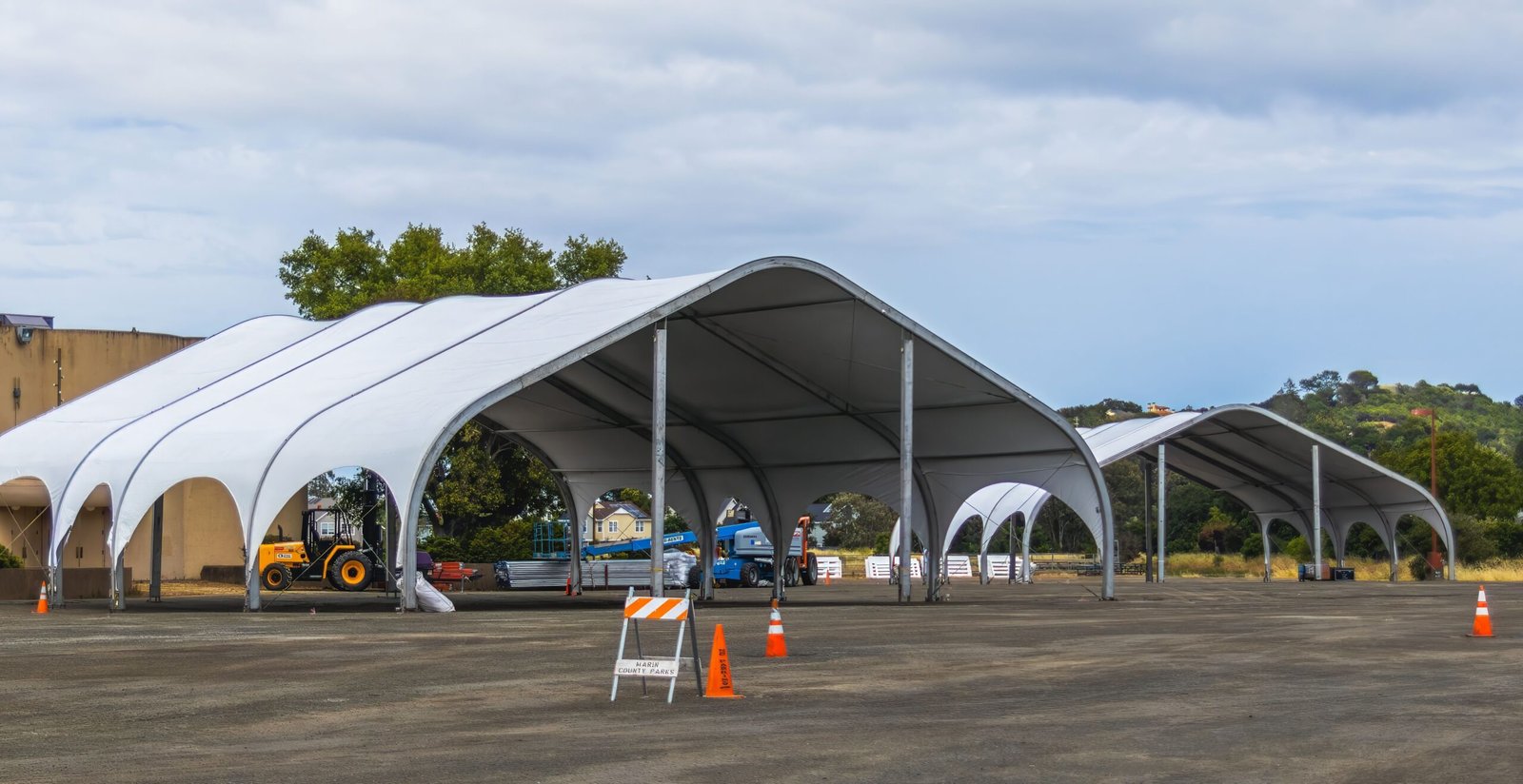
If your day-to-day operations involve machinery, stock, vehicles, or crews working outdoors, available space can disappear surprisingly quickly. A seasonal rush, a new project, or even a shipment that arrives later than expected can leave an otherwise well-organized site feeling overcrowded. Temporary covered workspaces can solve that problem without requiring a permanent construction project. They provide extra protected space when you need it, while giving you the flexibility to adapt as your workload changes—without the cost, delays, and long-term commitment of adding a new building.
Why speed matters more than most planning documents admit
Timing has a way of changing the math. If your busiest season is six weeks away, a nine-month building process isn’t a solution. It’s a future memory. Fast deployment often matters as much as square footage because delayed shelter can affect revenue, labor efficiency, and customer commitments.
That’s where a company like Container Canopies can become part of the solution. Container Canopies provides covered structures that use shipping containers as support points, giving businesses a flexible way to add protected work or storage space without constructing a permanent building from the ground up. For sites that already rely on shipping containers for storage, this type of setup can be a practical extension of the space they already have.
You’re not chasing architectural glory here. You’re solving for uptime, protection, and logistics. In many industries, a fast workable answer beats a perfect delayed one every single time.
Why businesses keep running out of usable space
Space problems rarely arrive with dramatic music in the background. They creep in through growth, shifting schedules, weather issues, and equipment that suddenly has nowhere sensible to live. A yard that worked fine six months ago can become a bottleneck once materials pile up, trucks need staging room, or repair work spills outside.
Permanent construction can solve that, but it often moves at the speed of paperwork. Permits, engineering reviews, labor availability, and site prep can stretch timelines longer than your operational window allows. That gap pushes many businesses to look at faster shelter options that support real work instead of acting as glorified storage tents. The goal isn’t just covering stuff. It’s keeping people productive, materials protected, and workflows moving when the site starts feeling like a game of industrial Tetris.
What temporary covered workspaces actually do well
A good temporary covered structure creates a controlled space without the long timeline of a conventional expansion. That matters on job sites, farms, logistics yards, manufacturing properties, ports, and industrial lots where conditions change quickly, and operations can’t pause for a construction saga.
These spaces are useful for more than simple storage. You can use them for:
– Equipment maintenance areas
– Vehicle protection
– Material staging
– Seasonal inventory overflow
– Loading and unloading support
– Covered fabrication or assembly zones
– Workforce shelter during rough weather
One practical example: a contractor dealing with delayed steel deliveries may need an immediate dry staging area near active crews. A temporary structure keeps materials accessible without scattering them across the site. You save time, reduce handling, and cut the odds of weather damage turning into an expensive line item.
Where these structures make the biggest operational impact
Some businesses benefit more than others, especially when work happens outdoors or inventory flow changes by season. Construction companies often need protected areas for tools, materials, and repair work. Agricultural operations may use covered space for machinery, feed, or processing support. Industrial yards can stage products and keep crews working despite weather that acts like it has personal issues.
Transportation and logistics teams also gain a lot from covered zones near loading points. If goods need to be sorted, wrapped, inspected, or held temporarily, shelter reduces disruption and helps preserve packaging quality. Even municipalities and public works departments can use temporary structures for fleet support and equipment storage.
The strongest use cases usually share three traits:
– Fast-changing space needs
– High exposure to weather
– A need to protect operations without a permanent build
If that sounds familiar, you’re not looking at a niche solution. You’re looking at a common business pressure point.
What to consider before choosing a temporary covered setup
Not all covered structures fit all sites. The useful decision starts with your actual workflow, not a generic dimensions chart. Think about what will happen under the canopy each day. Will forklifts move through it? Will mechanics need clearance for equipment repairs? Do materials require dry storage only, or a defined work zone with room for crews to move safely?
A few details matter more than people expect:
– Width and height clearance
– Wind and weather exposure
– Ground conditions
– Access for vehicles and machines
– Proximity to active operations
– Whether the space is for storage, labor, or both
You’ll also want to think about how long the need will last. Some businesses need a short-term fix for a project surge. Others discover temporary infrastructure handles recurring seasonal demand better than an expensive permanent addition. That realization tends to arrive right after the budget meeting, usually with less coffee than anyone wanted.
The financial argument is bigger than upfront cost
It’s easy to compare options based only on purchase or installation cost, but the real business case is broader. Covered workspace affects efficiency, damage rates, labor output, downtime, and how often crews waste time moving materials around to dodge weather. Those hidden costs add up faster than many site managers expect.
If rain delays repair work, if snow damages supplies, or if heat exposure reduces productivity, the shelter decision starts affecting margins rather than convenience. Even a modest improvement in material handling or work continuity can matter across a full season.
There’s also a risk-management angle. Protected spaces can reduce slip hazards, keep sensitive equipment out of harsh conditions, and help maintain cleaner job sites. That doesn’t magically erase every operational headache, but it can remove several repeat offenders. Sometimes the smartest infrastructure choice is the one that prevents daily annoyances from becoming expensive habits.
How to tell whether this approach fits your business
A temporary covered workspace makes sense when your operation needs protection and flexibility more than a permanent footprint. If your team keeps improvising with tarps, shifting schedules around weather, or storing valuable materials wherever there’s a spare corner, your setup may already be signaling that it’s time for a better system.
Start by asking a few direct questions:
– What activities are being slowed down by lack of covered space?
– What items are exposed to avoidable weather damage?
– How often do crews lose productive time because conditions aren’t workable?
– Is the demand temporary, seasonal, or likely to repeat?
Those answers usually reveal whether the issue is minor clutter or a real operational constraint. In plenty of businesses, the problem isn’t a lack of effort. It’s a lack of functional space in the right place at the right time. A flexible covered structure can close that gap and keep your site working like it was planned by adults.
 Prime Star
  Qamer Javed
  Wild Rise