

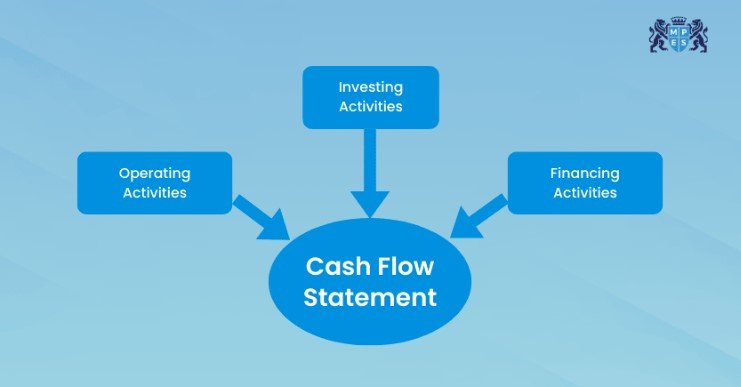
You open a balance sheet, an income statement, or a cash flow report, and the numbers seem to fight each other. Revenue looks strong, cash feels tight, expenses sit in the wrong place, and one line item can change how the whole business looks. That kind of confusion wears on you fast, especially when you are trying to make decisions, file taxes, talk to lenders, or simply understand whether the business is healthy. In those moments, outsourced CFO services in Lexington, KY can provide the clarity and guidance needed to make sense of the numbers.
Financial statements are supposed to bring clarity. For many owners, they do the opposite. The problem is rarely a lack of effort. It is that accounting reports use rules, categories, timing, and disclosures that are not always intuitive. A Certified Public Accountant helps turn those reports into something useful, readable, and accurate, so you can stop guessing and start acting on solid information.
Certified Public Accountants turn financial reports into decisions
A financial statement can look clean and still tell the wrong story. You might see profit on the income statement while the bank account keeps shrinking. You might assume a jump in sales means growth, but a CPA may spot unpaid invoices, weak margins, or rising debt behind the headline number. That gap between what the report says and what it means is where stress builds.
A CPA reads beyond the surface. They check whether revenue was recorded in the right period, whether expenses were classified properly, and whether the balance sheet reflects real obligations. They also connect the statements to each other. If net income rises but operating cash flow drops, that deserves attention. If inventory grows faster than sales, there may be purchasing or turnover issues. These are not small details. They shape pricing, hiring, borrowing, and tax planning.
You may also be dealing with reporting requirements that feel dense and technical. The Securities and Exchange Commission offers a helpful guide to reading financial statements, and even that basic overview shows how much is packed into these documents. A CPA takes that same framework and applies it to your real numbers, your industry, and your risks.
Financial statement simplification reduces costly mistakes
The biggest risk is not that a statement looks complicated. The biggest risk is acting on a misunderstanding. A business owner might cut marketing because profit looks low, when the real issue is a one time expense that distorted the month. Another owner might take on a loan because revenue is up, only to learn later that cash collections are too slow to support the payments.
This is where financial statement analysis becomes practical, not academic. A CPA can show you what belongs to normal operations and what does not. They can separate owner draws from business expenses, explain depreciation without drowning you in jargon, and flag liabilities that can hurt you later if they are ignored now.
Tax reporting adds another layer. The IRS expects organized records and consistent accounting methods. If your books are messy, year end becomes a scramble, and that scramble often leads to missed deductions, filing errors, or numbers that do not reconcile. The IRS publications on starting and keeping records and tax guidance for small business make clear how much depends on good financial tracking. A CPA helps build that order before it turns into a problem.
DIY review and professional CPA support produce very different outcomes
| Area | DIY Financial Review | CPA Support |
|---|---|---|
| Reading profit | Often focuses on top line revenue or net income alone | Connects profit to margins, timing, and cash flow |
| Error detection | Misclassifications can sit unnoticed for months | Reviews entries for accuracy and reporting impact |
| Tax readiness | Records may be incomplete or inconsistent | Organizes books to support cleaner filing and documentation |
| Decision making | Choices may rely on partial or misleading numbers | Uses statements to guide pricing, staffing, and growth |
| Lender or investor confidence | Reports may raise questions or require rework | Presents clearer statements with better support |
If you have ever tried to explain your own numbers to a bank, a partner, or even your spouse and felt your confidence drop halfway through, you already know the difference. Clear reporting does more than satisfy compliance. It gives you a steadier grip on the business.
How CPAs simplify financial statements in real business situations
A CPA does not just hand you a corrected report. They often reorganize the story behind it. If accounts receivable is climbing, they may point out that sales are not the issue, collections are. If payroll keeps rising, they can show whether labor costs are actually outpacing revenue or whether seasonality is skewing the month. If expenses feel too high, they can trace where overhead is spreading and whether those costs support growth.
That kind of clarity matters most when the pressure is already on. Maybe you are applying for financing. Maybe tax season is close and your books are behind. Maybe you are profitable on paper but still moving money around to cover bills. A CPA can simplify the statements, explain what deserves attention first, and help you avoid reacting to the wrong number.
Three steps you can take right now
- Gather the full set of reports. Pull your balance sheet, income statement, and cash flow statement for the same period. Looking at only one report creates blind spots, and those blind spots are where expensive assumptions start.
- Mark the numbers you do not trust. Do not wait until you understand everything. Circle the accounts that seem off, the swings you cannot explain, and any figure that conflicts with what you see in daily operations. That list gives a CPA a fast starting point.
- Get a professional review before major decisions. If you are borrowing, hiring, expanding, changing pricing, or preparing taxes, have a Certified Public Accountant review the statements first. A short review now can prevent months of cleanup later.
Clear financial statements create calmer decisions
You do not need to become an accountant to run a business well. You need financial statements that reflect reality and someone who can explain what the numbers are saying without burying you in technical language. That is the real value of a CPA. They simplify the confusion, reduce the risk, and help you move forward with more confidence.
If your reports feel harder to read than they should, reach out to a Certified Public Accountant and get your numbers translated into something you can use.
 Prime Star
  Wild Rise