

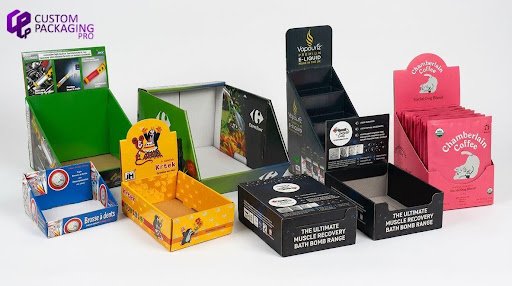
A retail display can look impressive when fully stocked and become difficult to shop after only a few products are removed. Packs fall forward, smaller items disappear behind larger ones, and promotional messages become hidden by the merchandise they are supposed to support.
Effective display packaging accounts for those everyday changes. It brings structure, product arrangement, branding, and customer access together so the display remains useful throughout its time in the store.
The starting point is the actual selling environment. Available space, product weight, unit count, replenishment, and retailer requirements should guide the design before decorative shapes or printed graphics are finalized.
What Should Display Boxes Accomplish?
Display boxes organize merchandise within a defined retail space. Depending on the format, they can sit on counters, occupy shelves, or form part of a freestanding promotional unit.
Their purpose extends beyond attracting attention. Customers need to identify the product, compare available options, and remove an item without disrupting the remaining stock.
Store staff also need a practical way to assemble, position, and replenish the display.
A useful design balances these needs. An oversized header cannot compensate for inaccessible products, and a compact footprint offers little benefit if the structure becomes unstable during normal use.
Start With the Retailer’s Available Space
Before developing custom display packaging, confirm where it will be placed and what restrictions apply.
A checkout counter, shelf bay, and promotional floor area each have different space requirements. Measure the usable footprint and account for nearby equipment, signage, and merchandise.
Ask the retailer about:
- Maximum width, depth, and height
- Permitted placement locations
- Product capacity expectations
- Price-label positions
- Assembly and delivery requirements
- Campaign duration
- Replenishment procedures
Do not assume one design will fit every store. A compact variation may be needed where the same promotion runs across locations with different layouts.
Counter Display Boxes Need a Manageable Footprint
Counter display boxes can suit smaller products such as cosmetics, packaged snacks, accessories, and samples. However, counter space is often shared with payment equipment and other merchandise.
The display should leave enough room for customers and staff to use the area comfortably.
A low front panel can help reveal products, while a back panel can carry a concise brand or promotional message. The proportions should suit the product rather than following a fixed visual formula.
Test removal from the front row and corners. Customers should not need to lift neighboring products or reach awkwardly around a tall side panel.
Design Display Boxes for Products at Different Stock Levels
A fully loaded sample shows only one stage of a display’s life. Its behavior changes as shoppers remove merchandise.
Evaluate the arrangement when full, half empty, and nearly depleted. Lightweight packs may lean or collapse into empty spaces, while tall containers may become less stable without adjacent support.
Dividers, fitted openings, or smaller product groups can help maintain order.
Check whether remaining products stay visible from the normal viewing position. A display that looks empty while several units remain at the back is not making good use of its capacity.
Partial-stock testing should happen before the structure is approved.
Custom Floor Displays Need Load and Stability Planning
A custom retail floor display must support its intended merchandise throughout the promotion.
The design should account for total packed weight, weight on each shelf, product arrangement, and how shoppers remove items. Shelf span and support placement matter alongside material selection.
For temporary floor displays, review:
- Base stability
- Shelf support
- Product retention
- Assembly connections
- Stability as stock decreases
- Access for replenishment
Avoid treating a tall display as simply an enlarged counter box. Its structure and loading conditions are different.
Confirm the intended configuration with the supplier and test it using actual products before rollout.
Cardboard Display Boxes Need Appropriate Material Specifications
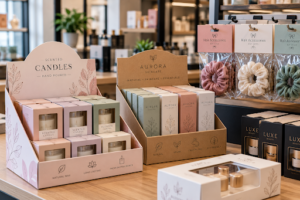
“Cardboard” is a broad description rather than a complete structural specification. Folding paperboard and corrugated board offer different construction possibilities, and performance varies within each category.
A small lightweight tray may have different needs from a multi-shelf promotional stand carrying bottles or jars.
When discussing a custom cardboard display box, provide dimensions, product weight, unit count, and expected service conditions.
Ask how the proposed material and construction support the intended load. Thickness alone does not establish suitability.
The assembled sample should demonstrate that shelves, walls, and connections perform together without relying on the products themselves to hold the display upright.
Cosmetic Display Boxes Should Make Variants Easy to Compare
Cosmetic display boxes often present several shades, sizes, or product types in one compact space.
Customers need a clear way to distinguish options without repeatedly lifting every item.
Use product grouping and readable labels to support comparison. Separate compartments can prevent narrow cartons or tubes from drifting into neighboring sections.
Check that the display does not hide the information needed to identify a shade or formula.
Where testers are part of the retail arrangement, give them a distinct position. The design should help customers and staff distinguish demonstration products from stock intended for sale.
Jewelry Display Boxes Need Controlled Presentation
Jewelry display boxes may organize individually packaged accessories, presentation cards, or small gift items.
The appropriate format depends on whether shoppers are expected to handle merchandise directly or request assistance.
For accessible products, consider supports that keep cards upright and prevent smaller items from becoming buried. Delicate surfaces should not rub against rough edges or neighboring components.
Higher-value merchandise may require a different fixture or security arrangement agreed with the retailer.
A printed cardboard display can organize products effectively, but it should not be presented as providing the same access control or long-term protection as a purpose-built enclosed case.
Shoe Display Boxes Need Clear Visibility and Identification
Shoe display boxes can serve several roles, from presenting a sample shoe to organizing boxed stock.
Define the intended use before choosing the structure. A display for one sample pair has different requirements from packaging that customers open to inspect available sizes.
Leave space for useful information such as style, size, and color identification.
If the shoe itself is visible, ensure the support suits its shape and weight. Displaying the product at an angle may improve viewing, but the arrangement still needs to remain stable.
Check how staff will replace the sample and access associated inventory during routine selling.
Die-Cut Features Should Improve Product Access
Die-cut openings can help position individual products, reveal packaging, or create a convenient front edge.
Their shape should follow the merchandise and how customers interact with it. An opening that grips too tightly can slow shopping, while one that is too loose may provide little support.
Removing material also changes the panel’s structure.
Review narrow sections around cutouts and any areas repeatedly handled during replenishment. Avoid decorative shapes that create easily damaged projections.
The finished sample should be tested with normal product variation, not just one carefully selected unit that fits perfectly.
Custom Printed Display Boxes Need a Clear Message
Custom printed display boxes should help customers understand the offer without competing with every package they hold.
Establish a clear information order:
- Brand identity
- Product category or main benefit
- Relevant promotional message
- Supporting details
- Price information where appropriate
Position important wording where products will not cover it.
Review graphics on the assembled structure at the expected viewing distance. Text that looks large on a computer screen may be difficult to read across a store aisle.
Keep variant-specific information on replaceable elements when the display will be used for changing assortments or promotions.

National Promotions Require Consistent Store Execution
A national promotion introduces more variables than a display used in one shop.
Store sizes, staffing, delivery arrangements, and available selling space may differ. The best packaging and display solution for the campaign should account for those differences before production.
Define the approved assortment, loading pattern, setup instructions, and placement expectations.
Custom in-store promotional display stands should be straightforward to identify and assemble. Clearly labeled components can help reduce confusion when staff receive several promotional deliveries.
Pilot the display in representative locations where possible. Feedback from actual setup and replenishment can reveal problems that a studio prototype does not show.
Plan Delivery, Assembly, and Replenishment Together
A display may arrive flat packed, partly assembled, or loaded with merchandise. Each approach changes storage, shipping, and setup requirements.
Flat-packed structures require assembly time and clear instructions. Preloaded displays need protection that keeps both the structure and products in their intended positions.
Confirm who will complete each step and what tools or additional materials are required.
Replenishment should also be practical. Staff should be able to add stock without dismantling the display or removing large quantities of remaining merchandise.
Keep instructions concise, and test them with someone who has not participated in the design process.
Acrylic Display Cases Serve a Different Purpose
Acrylic display cases and cardboard merchandising displays should be selected for their intended functions.
A clear display case can provide viewing access while enclosing an object. It may suit collectibles, models, jewelry, or products presented in a more permanent arrangement.
Cardboard product display boxes generally focus on organizing merchandise for accessible retail selling or temporary promotions.
Some retailers use both: an enclosed sample display alongside accessible packaged stock.
Choose according to visibility, handling, access, service life, and maintenance requirements. A premium display case for collectibles is not automatically the appropriate format for a frequently replenished promotional assortment.
Display Boxes Wholesale Need Practical Cost Comparisons
When ordering display boxes wholesale, compare the complete program rather than the unit price alone.
Relevant costs can include printing, structural components, packing, transport, assembly, store delivery, and replacement units.
A small business may benefit from a simple counter display that works across several locations. A larger campaign may need multiple formats built around a consistent visual system.
Before production, test:
- Capacity with actual products
- Performance under the intended load
- Assembly time
- Product removal
- Refill access
- Graphics and label placement
- Condition after representative handling
Keep an approved sample and written specifications as references for repeat orders.
Plan for End-of-Campaign Removal
Temporary displays need a practical plan for their final day as well as their first.
Consider how staff will remove remaining products, separate components, and handle the empty structure. Complicated mixed-material assemblies can create additional work.
Right-sizing and avoiding unnecessary decorative components may reduce material use without weakening the display.
Do not assume a cardboard appearance establishes recyclability. Coatings, adhesives, attachments, contamination, and local collection arrangements affect disposal options.
For reusable displays, identify which parts can remain and which graphics need replacement. Reuse is more practical when the structure stays serviceable and the next campaign fits its dimensions and load requirements.
Final Thoughts
Display packaging should remain useful as products are purchased, stock is replenished, and promotional conditions change. Visibility matters, but so do access, stability, assembly, and the work required from store staff.
Well-planned Custom Retail Packaging connects individual product presentation with the surrounding display. Consistent Branded Boxes can support recognition across counters, shelves, and promotional areas without overwhelming the merchandise.
When briefing a Custom Packaging Supplier, share product samples, location measurements, expected quantities, and setup requirements. These details help shape Custom Product Packaging that works within the actual retail environment.
Approve the display using realistic stock levels and handling conditions. A structure that remains organized throughout the campaign gives shoppers a clearer path from noticing a product to selecting it.
Frequently Asked Questions
- What is display packaging used for?
Display packaging holds and presents products in retail locations such as counters, shelves, checkout areas, and promotional floor spaces. It can organize merchandise, carry printed branding, and make products easier to identify and access. The appropriate structure depends on the products and available selling space.
- What is the difference between counter and floor display boxes?
Counter display boxes occupy smaller surfaces and commonly hold compact products. Floor displays are freestanding structures that may include several shelves or product sections. Floor formats require their own load, stability, footprint, and assembly planning rather than simply enlarging a counter design.
- Can cardboard display boxes hold heavy products?
Some corrugated display structures can be designed for heavier merchandise, but suitability depends on material specifications, shelf spans, supports, connections, and loading patterns. Confirm the intended capacity with the supplier and test the assembled display with actual products under representative conditions.
- How are custom display packaging dimensions determined?
Dimensions should reflect the retailer’s available space, product measurements, unit count, customer access, and replenishment method. Include headers, side panels, and other projections in the overall measurements. Test the layout at different stock levels before approving the final structure.
- Are acrylic display cases the same as display packaging boxes?
No. Acrylic display cases generally provide an enclosed viewing space, while merchandising display boxes commonly organize products for accessible retail selling. The right choice depends on whether the priority is enclosed presentation, frequent product removal, replenishment, or a temporary promotional campaign.
- What should businesses test before ordering display boxes wholesale?
Test product fit, structural support, stability, assembly instructions, print visibility, and replenishment. Evaluate the display when fully loaded and partially empty. Also confirm delivery configuration, store placement requirements, and campaign duration before committing to production quantities.
 Backlinks Hub
 Admin
 Qamer Javed