

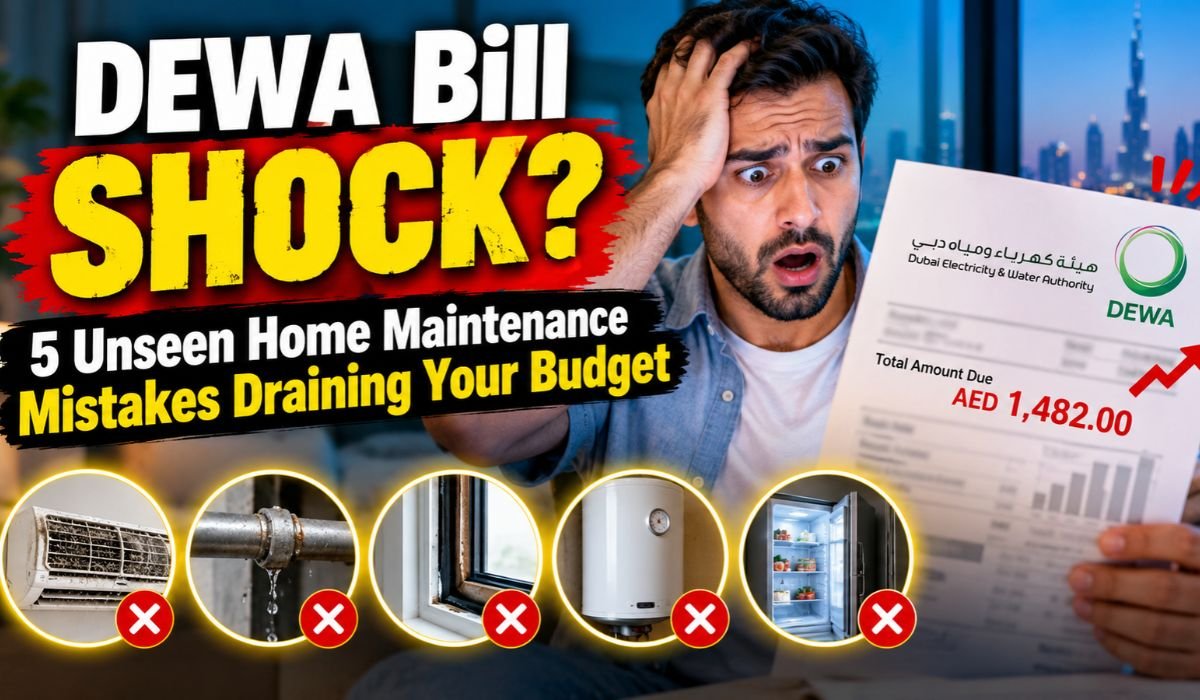
A sudden jump in your DEWA bill can make you question everything. Was the AC left running overnight? Did someone change the thermostat? Is an appliance using more power than usual?
Sometimes, though, the real problem is less obvious. Your cooling system may still be working, but not particularly well. Dust, small leaks, poor airflow, and delayed servicing can all make it use more electricity than it should.
That matters in Dubai, where air conditioning is not something most homes or shops can simply switch off for long stretches. When the system loses efficiency, the extra cost builds quietly.
Here are five things to check:
1. The Filter Is Dirty, but the AC Keeps Running Anyway
A clogged filter rarely causes a dramatic failure. That is part of the problem. The AC still turns on. Cool air still comes through the vents. It just takes longer to bring the room down to temperature.
You may first notice it in one bedroom or in the back of a shop. The airflow feels weaker. The space stays warm for longer. Instead of checking the system, you lower the thermostat and leave it there.
Now the AC has two problems: restricted airflow and a lower temperature target.
Dust on the evaporator or condenser coils can slow the system down in much the same way. These parts need clean surfaces to move heat effectively. Once dirt builds up, the AC may run for longer cycles and place more strain on the fan and compressor.
Filters are easy to overlook because they are hidden. They are also one of the first things worth checking when cooling weakens or electricity use starts climbing.
2. The “Gas Top-Up” Is Only Buying Time
Weak cooling often leads to the same suggestion: refill the AC gas.
That may improve things for a while. But if the refrigerant level has dropped because of a leak, a refill alone does not solve much. The new refrigerant escapes, cooling weakens again, and you end up paying for the same service twice.
Refrigerant works inside a closed system. It should not need regular topping up under normal conditions. Signs of a possible leak include:
- Ice on the coil
- Hissing sounds
- Poor cooling
- The AC never reaches the set temperature
None of these confirms the problem on its own, but they are enough to justify an inspection. A proper repair starts with finding out why the level is low. That may take more time than adding gas, but it is usually the better use of your money.
3. Cool Air Is Escaping Before You Enjoy It
Sometimes, the AC is working fine, and the real problem is the space around it. In a retail shop, for example, leaving the entrance open can let cooled air disappear almost as fast as the system produces it.
That kind of waste is easy to overlook because the AC itself may show no obvious fault.
The thermostat can add to the problem. If it sits in direct sunlight, near a warm appliance, or beside a door that opens often, it may think the room is hotter than it really is. The AC then keeps running to correct a temperature that only exists in that one spot.
Walk through the property while the AC is running and check for:
- Weak airflow
- Unusually warm areas
- Loose seals
- Rooms that never seem to match the thermostat setting
Sometimes the problem is not the unit itself but where the cooled air is going.
4. You Keep Waiting for a Complete Breakdown
An AC does not need to stop working before it needs attention.
Water dripping from an indoor unit, a new rattling sound, stale smells, or one room that never cools properly are all signs that something has changed. It may be a small issue. It may also be the start of a much more expensive one.
A blocked drain can eventually cause water damage. A worn motor can keep running until it fails. A struggling compressor may continue drawing power while delivering poor cooling.
This is where early use of AC repair services in Dubai can save more than an emergency callout later. A planned inspection gives you time to understand the fault, compare the repair cost, and decide what to do before the space becomes unbearable.
For retail tenants, a slow response can cost more than the repair itself. Staff may struggle to work comfortably, while customers have little reason to stay in a hot shop. The longer the problem drags on, the more trading time you risk losing.
5. Maintenance Only Happens When Someone Complains
Paying for service only when something goes wrong may seem like the cheaper option but in practice, it often means cleanings get skipped. When that happens, the same faults keep returning.
This is especially common in villas, larger apartments, and shops with several AC units. One system gets cleaned. Another is forgotten. A drainage issue is fixed, but no one checks the coil or thermostat.
An annual maintenance contract in Dubai can bring some order to that process. Scheduled visits make it easier to clean filters and coils, inspect drainage lines, spot leaks, and deal with worn parts before they cause disruption.
Still, not every contract offers the same coverage. Before signing, check the details rather than relying on the package name.
Look at:
- The number of scheduled visits
- Emergency callout terms
- Labor coverage
- Spare-parts exclusions
- Refrigerant charges
- Response times
- The number and type of units covered
A comprehensive plan may include more, but it will usually cost more as well. A non-comprehensive plan can still be useful when you mainly want routine servicing and access to technicians.
Tenants should also check the lease. Routine maintenance may sit with the tenant, while major component repairs remain the landlord’s responsibility.
Frequently Asked Questions
Can a dirty AC filter increase a DEWA bill?
Yes. When a filter is packed with dust, air cannot move through the system as easily. The AC then has to run longer to cool the room, which can push electricity use higher.
How often should an AC be serviced in Dubai?
There is no single schedule that suits every property. A unit that runs for most of the day or collects dust quickly may need servicing several times a year, while a lightly used system may need less frequent attention.
Does weak cooling always mean low refrigerant?
No. Dirty coils, blocked filters, duct leaks, thermostat problems, and failing parts can all cause weak cooling. The system should be checked before any gas is added.
Is an annual AC maintenance contract worth it?
It may be, particularly for properties with several units or a history of recurring faults. The contract is only worthwhile when the included visits, response times, and exclusions suit the property.
Can a tenant arrange AC maintenance?
Usually, but the lease should be checked first. It may divide routine servicing and major repair costs between the tenant and landlord.
Find the Waste Before It Reaches the Bill
A higher DEWA bill does not necessarily mean you have been careless with the AC. Dust buildup, small leaks, weak airflow, or overdue servicing may be forcing the system to work harder in the background. Catching the issue early can help restore better cooling and keep the next bill from bringing another surprise.
 Sky News Agency