

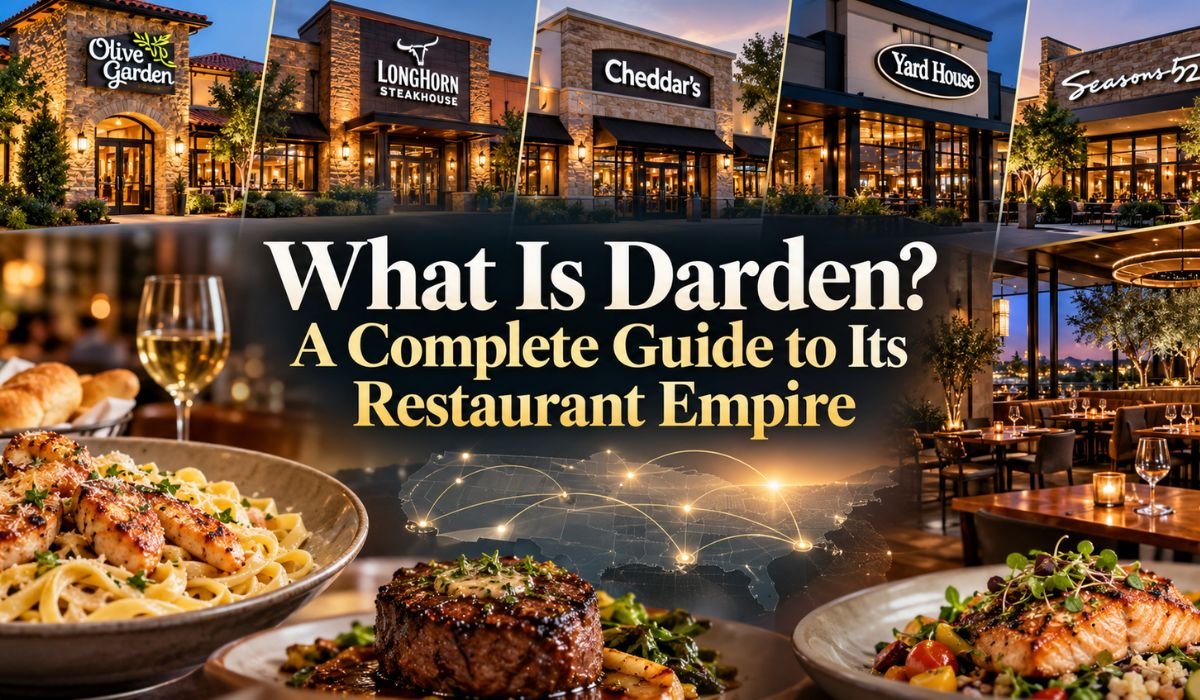
Millions of people eat at Darden Restaurants every year without necessarily recognizing the Darden name. That’s because the company itself usually stays in the background. What customers see instead are familiar Restaurant Brands such as Olive Garden, LongHorn Steakhouse, Cheddar’s Scratch Kitchen, Yard House, Ruth’s Chris Steak House, The Capital Grille, Chuy’s, Seasons 52, and Eddie V’s.
Together, these Brands give Darden a broad presence across American Full-Service Dining. Some are built for relaxed family meals, while others cater to Steakhouse dinners, Seafood lovers, Tex-Mex fans, or special occasions. The experiences can feel completely different, even though the Restaurants ultimately belong to the same corporate family.
By 2026, Darden had grown into a Restaurant Network of more than 2,200 locations, supported by more than 200,000 Team Members. The company says its Restaurants serve more than 455 million guests each year.
Those numbers tell only part of the story. Darden’s real strength lies in its ability to combine recognizable, individual Restaurant Brands with the resources of a large corporation. Purchasing, technology, consumer insights, Supply-Chain Management, Restaurant Development, and strategic planning can be handled at scale, while each Brand maintains its own identity.
That combination has helped turn Darden into one of the most significant names in American Full-Service Dining.
Quick Bio Information
| Information | Details |
|---|---|
| Company Name | Darden Restaurants, Inc. |
| Common Name | Darden |
| Industry | Restaurant And Hospitality |
| Business Type | Full-Service Restaurant Company |
| Historical Founder | Bill Darden |
| Historical Roots | 1938 |
| First Restaurant | The Green Frog |
| Independent Darden Company | 1995 |
| Headquarters | Orlando, Florida |
| Stock Exchange | New York Stock Exchange |
| Stock Symbol | DRI |
| President And CEO | Rick Cardenas |
| Current Core Portfolio | Nine Restaurant Brands |
| Restaurant Network | More Than 2,200 Locations |
| Workforce | More Than 200,000 Team Members |
| Annual Guest Reach | More Than 455 Million |
| Main Market | North America |
| Largest Brand By Sales | Olive Garden |
| Major Business Focus | Full-Service Dining |
| Notable Former Brand | Red Lobster |
What Is Darden?
Darden Restaurants, Inc. is a publicly traded Full-Service Restaurant Company headquartered in Orlando, Florida. Unlike a conventional Restaurant Chain operating under one name, Darden manages a collection of separate concepts. Each has its own menu, atmosphere, price point, and reason for attracting customers.
That’s why a customer may be very familiar with Olive Garden but know little about Darden itself. The parent company works largely behind the scenes, supporting its Restaurant Brands through areas such as corporate strategy, purchasing, Restaurant Development, technology, consumer research, and Supply-Chain Management.
The arrangement gives individual Brands room to build their own personalities while still drawing on the capabilities of a much larger organization.
Darden describes its mission around financial success achieved through people consistently delivering strong food, drinks, service, and welcoming Restaurant experiences. Put more simply, Darden is the corporate organization connecting several major Full-Service Restaurant Chains under one business.
The History Of Darden
The story behind Darden began decades before the modern corporation appeared.
In 1938, a 19-year-old Bill Darden opened a small, 25-seat Restaurant called The Green Frog in Waycross, Georgia. His early Restaurant ventures eventually grew into something much larger, laying the groundwork for the company that would later carry his name.
A major turning point arrived in 1968 when Darden opened the first Red Lobster in Lakeland, Florida. General Mills acquired Red Lobster in 1970, helping the concept expand. Another major Restaurant Brand followed in 1982, when the first Olive Garden opened in Orlando.
The modern Darden Restaurants emerged in 1995, when General Mills separated its Restaurant operations into an independent publicly traded company.
The portfolio has continued to change ever since. Red Lobster, despite its importance to Darden’s early history, was sold in 2014 and is no longer owned by the company. Meanwhile, acquisitions and Restaurant Development brought other concepts into the Darden family.
Understanding that evolution is important because Darden’s Restaurant Empire has never been static. Brands have been created, purchased, expanded, sold, or repositioned as the company has changed with the Restaurant Industry.
Who Owns Darden?
There’s no single private owner behind Darden Restaurants today.
Darden Restaurants, Inc. is a Public Company whose shares trade on the New York Stock Exchange under the ticker symbol DRI. Ownership is therefore distributed among shareholders, including both individual and institutional investors.
The company is led by President and Chief Executive Officer Rick Cardenas. Darden’s Corporate Leadership is responsible for broader business strategy, financial priorities, investment decisions, and long-term development.
Individual Restaurant Brands, however, need their own identities.
Someone choosing Eddie V’s for a special dinner has different expectations from a family visiting Olive Garden. A customer heading to Chuy’s for Tex-Mex is looking for something different again. Darden’s job is to capture the advantages of operating at scale without making those experiences feel interchangeable.
That balance sits at the center of the company’s strategy.
Darden Restaurant Brands
Darden’s current core Restaurant Portfolio contains nine Brands, giving the company exposure to several areas of Full-Service Dining.
Olive Garden is the largest Darden Brand by sales and is centered on Italian-American Casual Dining. LongHorn Steakhouse, another major part of the business, specializes in steaks and traditional American Steakhouse dishes.
Cheddar’s Scratch Kitchen occupies the comfort-food side of Casual Dining, offering familiar American dishes in an approachable setting. Yard House combines a broad American menu with an extensive selection of draft beer, while Chuy’s gives Darden a distinctive Tex-Mex concept.
Seasons 52 takes a somewhat different approach, building its identity around a seasonally changing menu and fresh ingredients.
The company also has a substantial presence in Premium Dining. Ruth’s Chris Steak House and The Capital Grille target customers seeking an upscale Steakhouse experience, while Eddie V’s combines Prime Seafood, steaks, and a more sophisticated atmosphere.
This diversity gives Darden an important advantage. Rather than relying on a single Restaurant Concept, it can serve different budgets, tastes, and dining occasions.
How Big Is Darden?
Darden’s scale becomes clear when looking beyond the individual Brands.
The company says its Restaurant Network includes more than 2,200 locations and serves more than 455 million guests annually. That makes the organization considerably larger than what a customer might imagine after seeing only one Restaurant Brand.
Financial filings offer an even clearer snapshot. At the end of Darden’s fiscal 2027 first quarter on August 30, 2026, the company reported 2,218 Company-Owned Restaurants in continuing operations.
Olive Garden alone accounted for 953 locations, while LongHorn Steakhouse had 624. Those two Brands therefore represent a particularly important part of Darden’s physical footprint.
Darden also operates across all 50 U.S. states. Such broad geographic reach creates obvious opportunities, but it brings complexity as well. Restaurant Real Estate, customer preferences, labor markets, food distribution, and operating costs can vary considerably from one region to another.
Managing thousands of Restaurants consistently is therefore a major undertaking in itself.
How Darden Makes Money
At its core, Darden’s Revenue Model isn’t difficult to understand. Customers enter its Restaurants, order food and beverages, and pay for their meals. Multiply those transactions across thousands of locations and hundreds of millions of annual guest visits, and the result is a multibillion-dollar Restaurant Business.
What happens behind each transaction is far more complicated.
Restaurants have substantial operating expenses. Ingredients must be purchased and transported, employees must be paid, buildings need to be maintained, utilities have to remain running, and technology systems require investment. Marketing, Restaurant Development, training, property expenses, and other costs also influence profitability.
Darden’s size can provide advantages in areas such as purchasing, technology, consumer research, and Supply-Chain Management. Yet scale doesn’t eliminate the fundamentals of the Restaurant Business.
A location still needs customers. Food must be prepared properly. Service needs to meet expectations. Menu prices have to feel reasonable. Costs need to remain under control.
In other words, corporate scale can help, but Restaurant-Level Execution still matters every day.
Darden Financial Performance
Financial Performance provides one of the clearest ways to understand the size and health of Darden’s business.
For the first quarter of fiscal 2027, which ended August 30, 2026, Darden reported approximately $3.2 billion in total sales. That represented an increase of 5.1 percent compared with the corresponding reported fiscal quarter a year earlier.
The company also reported blended Same-Restaurant Sales Growth of 3.1 percent on a fiscal-calendar basis. LongHorn Steakhouse stood out during the period, posting 6.2 percent Same-Restaurant Sales Growth on the same basis.
Same-Restaurant Sales deserve attention because they offer more context than overall Revenue Growth alone. The metric looks at performance from established Restaurants, helping investors and analysts separate growth at existing locations from sales added simply by opening or acquiring more Restaurants.
For anyone evaluating Darden’s Financial Performance, both figures matter. Total sales show the overall scale and direction of the company, while Same-Restaurant Sales can reveal how established locations are performing.
Why Darden’s Business Model Works
Darden can be understood in two ways at once: as a Restaurant Operator and as a shared business platform.
Customers interact with the individual Brands. They choose Olive Garden, LongHorn Steakhouse, Chuy’s, or The Capital Grille based on what they want to eat and the type of experience they’re seeking.
Behind those Brands sits Darden.
The parent company can provide resources in purchasing, consumer research, Restaurant Development, technology, Supply-Chain Management, financial planning, and leadership development. Smaller independent Restaurant Businesses often can’t invest in those areas at the same scale.
But there is a limit to how much standardization makes sense.
Ruth’s Chris shouldn’t feel like Cheddar’s Scratch Kitchen. Eddie V’s shouldn’t simply become a more expensive version of another Darden concept. Each Brand needs a recognizable personality and a clear reason for customers to choose it.
Darden’s Business Model therefore depends on finding a middle ground: sharing resources where scale creates value while protecting the individuality that creates Brand Loyalty.
Food Quality And Safety
Food Safety takes on added importance when a company operates thousands of Restaurants and serves more than a million meals in a typical day.
A business of Darden’s size has to think far beyond what happens inside an individual kitchen. Ingredients need to be sourced, inspected, transported, stored, prepared, and served according to appropriate standards throughout a large Supply Chain.
Darden publicly identifies Food Safety And Quality as an important part of both its Supply-Chain and Restaurant Operations. Its approach includes Supplier Standards, quality controls, Restaurant procedures, and inspections.
These systems matter because customers don’t judge food safety at a corporate level. Their trust is shaped by what happens at the specific Restaurant they visit.
Brand Recognition may persuade someone to walk through the door, but maintaining that trust depends on cleanliness, consistent food preparation, ingredient quality, and reliable execution every time they return.
Employees And Career Development
Restaurants remain highly dependent on people, regardless of how much technology enters the industry.
Darden reports a workforce of more than 200,000 Team Members. Those employees work across Restaurant Kitchens, dining rooms, management teams, corporate offices, marketing, finance, technology, Supply-Chain Operations, and other parts of the organization.
The company’s 2026 workforce figures provide more detail about advancement within the business. Darden reported approximately 205,000 U.S. Team Members and around 10,000 Restaurant leadership positions. During fiscal 2026, 1,374 Team Members were promoted into management roles. It also reported that 68 percent of Restaurant Managers had been promoted from hourly positions.
Those figures help explain why employee development matters to the Darden Business Model.
A Restaurant may have a strong menu and a recognizable name, but poor execution can quickly damage the customer experience. Developing managers and experienced Team Members can therefore influence service, employee retention, Restaurant consistency, and future expansion.
Community Impact
With thousands of Restaurants spread across the country, Darden’s relationship with local communities goes beyond serving meals.
The company’s Community Programs cover areas such as hunger relief, surplus food donations, disaster support, and nonprofit partnerships. Feeding America has been among Darden’s notable relationships in the fight against hunger.
Another example is the company’s Harvest Program. Through the initiative, qualifying surplus food that hasn’t been served to guests can be prepared for donation rather than simply discarded.
Programs like these provide useful context when examining Darden’s wider impact. At the same time, Corporate Social Responsibility is best evaluated through measurable outcomes rather than promotional statements alone.
Donation totals, participation levels, published Impact Reports, and documented results give readers a more meaningful way to assess what a company is actually doing.
Sustainability And Responsible Operations
The environmental footprint of a Restaurant Company with thousands of locations is substantial.
Restaurants use food, water, electricity, cooking fuel, packaging, cleaning products, and other resources every day. They also generate food waste and other forms of waste that need to be managed.
Darden identifies Responsible Sourcing, Energy And Water Conservation, Waste Management, Climate Risk, and Food Supply practices among its Sustainability priorities.
The company’s scale makes these issues particularly relevant. Darden says its Restaurants serve more than one million meals each day. When operations reach that level, even relatively small improvements in energy use, water consumption, food waste, or packaging can become significant when repeated across the entire Restaurant Network.
Food Waste is a practical example. Darden’s Harvest Program provides a way for suitable surplus food to be redirected toward community organizations. The company has also reported initiatives involving used cooking-oil recycling and other Waste-Management practices.
As with any Corporate Sustainability program, however, commitments should be judged by measurable progress over time. Targets and policies provide direction; results show whether those efforts are actually working.
Competition And Challenges
Being one of the largest companies in Full-Service Dining doesn’t protect Darden from competition.
Customers have more choices than ever. Darden Brands compete with other national Restaurant Chains, local independent Restaurants, Fast-Casual Concepts, Quick-Service Companies, takeout businesses, delivery platforms, and even meals prepared at home.
Costs add another layer of pressure.
Beef, Seafood, produce, wages, utilities, Restaurant Real Estate, insurance, and other expenses can all affect profitability. Raising menu prices may help offset some of those increases, but there is always a limit. If customers begin to feel they’re no longer receiving good value, they can simply eat somewhere else or dine out less often.
Consumer expectations are changing as well. Many guests now want digital ordering and convenient takeout in addition to good table service. At the same time, people who choose Full-Service Dining still expect hospitality and an experience that feels different from ordering Fast Food.
Darden therefore has to modernize without losing the human service that makes Full-Service Restaurants distinctive.
What Is Happening With Bahama Breeze?
Bahama Breeze deserves special attention because older information about Darden can easily create confusion.
The Caribbean-inspired Restaurant Brand was part of Darden’s portfolio for years. However, in February 2026, the company announced that Bahama Breeze was no longer considered a strategic priority. Darden decided that some locations would permanently close while others would be converted to different Darden Brands.
By August 30, 2026, financial disclosures showed 10 Bahama Breeze Restaurants remaining.
Darden excluded Bahama Breeze from its fiscal 2027 Same-Restaurant Sales calculation because the remaining locations were expected to close or convert to other Darden Brands by the fourth quarter of fiscal 2027.
For that reason, a current overview of Darden shouldn’t count Bahama Breeze among the company’s nine core long-term Restaurant Brands.
The situation also provides a useful example of how Darden manages its wider portfolio. Growth isn’t only about buying Brands and opening Restaurants. Sometimes management decides that capital and Restaurant locations could perform better under another concept.
The Future Of Darden
Darden’s next stage of growth will depend on more than simply increasing its Restaurant count.
New locations remain one potential source of expansion, but each opening requires the right market, Restaurant Real Estate, staffing, investment, and customer demand. The company also has to decide which existing Brands offer the strongest opportunities for long-term growth.
Acquisitions have played an important role in broadening the portfolio. Ruth’s Chris Steak House strengthened Darden’s position in Premium Dining, while the acquisition of Chuy’s added a distinctive Tex-Mex Brand.
At the same time, the decision to phase out Bahama Breeze shows that portfolio management works in both directions. Brands that fit Darden’s strategy can receive investment and expansion opportunities, while concepts that no longer fit may be closed, sold, or converted.
Looking ahead, Restaurant traffic, Customer Loyalty, employee retention, menu value, Restaurant Development, digital capabilities, cost management, and economic conditions will all influence Darden’s performance.
Growth matters, but disciplined growth matters more.
Why Darden Matters
Darden offers an interesting example of how a Restaurant Company can become enormous without asking every Restaurant to look or feel the same.
A family sharing pasta at Olive Garden may have little in common with a couple celebrating an anniversary at The Capital Grille. Someone visiting Chuy’s for Tex-Mex is seeking a different experience from a customer ordering steak at LongHorn.
Yet behind all of those meals sits the same larger organization.
That corporate structure provides scale, purchasing power, technology, expertise, and other resources. The Restaurant Brands provide the personality.
It’s an effective model when both sides work together. But Darden’s size doesn’t change one basic reality of the Restaurant Business: every visit is personal to the customer.
A corporation can manage thousands of locations, but guests judge the company through the food placed in front of them, the service they receive, the value of the bill, and whether the experience makes them want to come back.
Final Thoughts
Darden has traveled a remarkable distance from the small Restaurant Bill Darden opened in Georgia in 1938.
Today, Darden Restaurants is one of the most significant companies in American Full-Service Dining, operating more than 2,200 Restaurants and employing more than 200,000 Team Members.
Its core portfolio includes Olive Garden, LongHorn Steakhouse, Yard House, Ruth’s Chris Steak House, Cheddar’s Scratch Kitchen, The Capital Grille, Chuy’s, Seasons 52, and Eddie V’s. Together, those Brands give the company a presence across everyday Casual Dining, Tex-Mex, Seafood, Steakhouses, and Premium Dining.
The numbers are impressive, but Darden’s long-term success won’t be determined by size alone.
The company must continue delivering reliable food and service, maintaining attractive value, developing employees, controlling Restaurant costs, adapting to changing consumer habits, and preserving what makes each Brand distinctive.
That’s ultimately what makes the Darden Business Model worth understanding. The organization operates on a huge scale, yet its success still comes down to something much smaller and more human: whether the person sitting at the table enjoys the experience enough to return.
FAQs About Darden
What Is Darden?
Darden Restaurants, Inc. is a publicly traded Full-Service Restaurant Company headquartered in Orlando, Florida. Rather than operating every Restaurant under the Darden name, it owns and manages several separate Restaurant Brands covering Casual Dining, Steakhouses, Seafood, Tex-Mex, and Premium Dining.
What Restaurants Does Darden Own?
Darden’s current core portfolio includes Olive Garden, LongHorn Steakhouse, Yard House, Ruth’s Chris Steak House, Cheddar’s Scratch Kitchen, The Capital Grille, Chuy’s, Seasons 52, and Eddie V’s. These Brands allow the company to serve customers across a wide range of dining occasions and price points.
Does Darden Own Olive Garden?
Yes. Olive Garden is owned by Darden Restaurants and is one of the most important Brands in the company’s portfolio. The Restaurant Chain focuses on Italian-American Casual Dining and has hundreds of locations across the United States.
Does Darden Own Red Lobster?
No. Red Lobster is closely connected to Darden’s early history, but it is no longer owned by the company. Darden completed the sale of Red Lobster in 2014, so current lists of Darden Restaurant Brands shouldn’t include it.
Does Darden Still Own Bahama Breeze?
Darden still had 10 Bahama Breeze locations as of August 30, 2026, but the Brand is being phased out. The company expects the remaining locations to close or be converted to other Darden Restaurant Brands by the fourth quarter of fiscal 2027. As a result, Bahama Breeze isn’t counted among Darden’s nine core long-term Brands.
Who Owns Darden Restaurants?
Darden Restaurants isn’t owned by one individual or family. It is a Public Company listed on the New York Stock Exchange under the ticker symbol DRI. Ownership is distributed among the investors and institutions that hold shares in the company.
Where Is Darden Headquartered?
Darden Restaurants is headquartered in Orlando, Florida. The state also has deep historical importance to the company. The first Red Lobster opened in Lakeland, Florida, while the first Olive Garden opened in Orlando.
How Many Restaurants Does Darden Operate?
Darden describes its overall Restaurant Network as having more than 2,200 locations. At the end of its fiscal 2027 first quarter on August 30, 2026, the company reported 2,218 Company-Owned Restaurants in continuing operations. Because Restaurant openings, closures, acquisitions, and conversions can change the total, dated figures provide the most accurate picture of the company’s size.
Learn more and explore exciting content on: What Is Coyyn.com? A Complete Guide to the Platform
 Blitz Blitz
 IQ newswire