

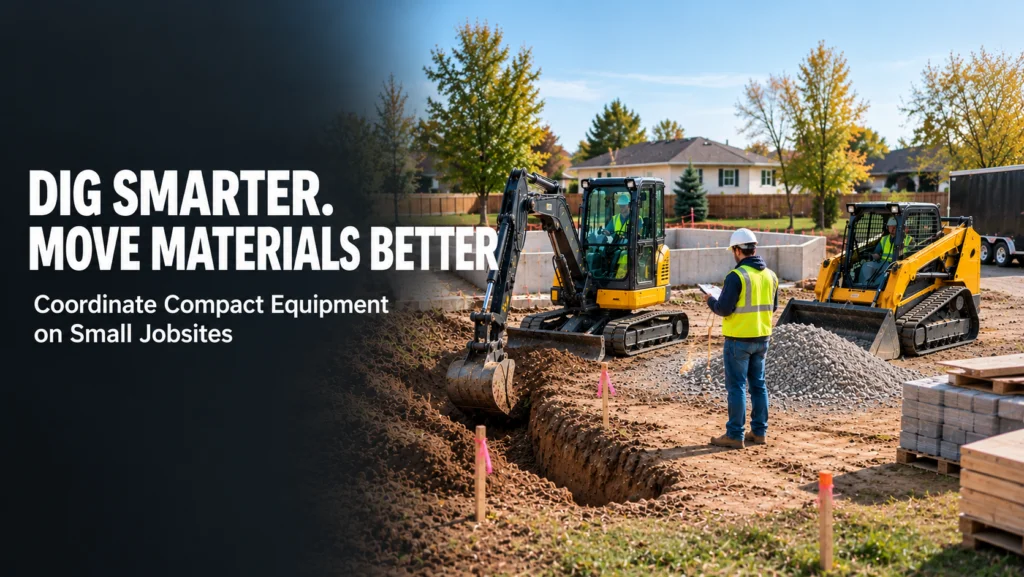
Small construction sites often have limited space for equipment, materials, and workers. Tasks such as digging foundations, preparing trenches, moving soil, and clearing debris may need to happen in the same area. Without a clear plan, these activities can slow each other down and create safety risks.
Good coordination helps contractors keep work moving while making better use of their equipment and labor. The key is to plan digging and material handling together, rather than treating them as separate jobs.
Plan the Work Before Equipment Arrives
Start by reviewing the site layout and deciding where each activity will take place. Identify the excavation areas, material storage points, delivery access, and routes that workers and equipment will use.
On a small site, even a temporary pile of soil can block a narrow passage or prevent another machine from reaching its work area. Planning where excavated material will go can help avoid repeated handling and unnecessary movement.
It is also useful to break the project into stages. For example, the team might complete one section of trenching, move the excavated soil to an agreed location, and then prepare the area for the next task. The exact sequence will depend on the project, but every worker should understand the plan before work begins.
Match Each Machine to the Task
Different machines serve different purposes. A mini excavator is generally suited to digging, while a compact loader can help move materials around the site. Using equipment for the tasks it is designed to handle can improve workflow and reduce unnecessary effort.
Before choosing machinery, consider the available space, ground conditions, required digging depth, and amount of material that needs to be moved. The machines must also be able to reach their working areas without interfering with one another.
When a Mini Excavator Is Needed for Digging
A mini excavator is useful for tasks such as digging foundation trenches, removing soil, and preparing areas for drainage or utility installation. Its boom, arm, and bucket allow the operator to work below ground level and remove material from a defined area.
Selecting the right mini excavator starts with understanding your site conditions. Check the machine’s dimensions, digging depth, reach, and operating capacity to ensure it can handle the job. Even if the model is compact, measure access points and available working space before making a final decision.
Plan where the excavator will position itself and where the removed soil will be placed. The loading or removal route should not cross an active work area unnecessarily. If workers need to install pipes or inspect the excavation, coordinate these activities with the operator so people are not working in unsafe positions near moving equipment.
Use a Mini Track Loader for Material Handling
After excavation begins, soil and other materials need to be moved, stored, or removed. A mini track loader can help with transporting soil, moving gravel, clearing debris, and preparing ground, depending on its specifications and compatible attachments.
A mini track loader is useful when material must travel between the excavation area and a designated stockpile or loading point. Before selecting a machine, check its width, operating capacity, ground requirements, and attachment compatibility.
The loader’s route should be planned before work starts. Avoid placing soil piles where they block access, restrict visibility, or force workers to cross the machine’s path. The operator should also have a clear understanding of where materials need to go and when the route is available.
Coordinate Timing Between the Two Machines
Using an excavator and a loader at the same time can save effort, but only when their activities are properly coordinated. If both machines need the same narrow route, one may have to wait while the other moves into position.
Set a clear work sequence and agree on communication methods before operations begin. Depending on the site, it may be more efficient to let the excavator complete a section before the loader moves in to collect or transport the material.
Do not allow workers to stand between machines or enter operating areas without coordination. Establish safe working zones, maintain clear visibility, and follow the equipment operators’ safety procedures. If the site is too restricted for both machines to operate safely at once, use a staged approach instead.
Keep Materials and Access Routes Organized
Good site organization helps prevent delays. Store materials in designated locations, keep walkways clear, and avoid placing deliveries where they interfere with digging or loading.
Check the site throughout the day. Rain can soften the ground, new deliveries can reduce available space, and changes to the excavation may affect the planned equipment route. Adjust the sequence when conditions change rather than forcing the original plan to continue.
Before digging, arrange appropriate checks for underground utilities. Site drawings can support planning, but they do not replace proper utility locating. Also make sure excavations are assessed and protected according to the relevant safety requirements.
Final Thoughts
Coordinating digging and material handling on a small construction site requires clear planning, suitable equipment, and good communication. A mini excavator can handle excavation work, while a mini track loader can help move materials and clear the work area.
Map out equipment routes, decide where excavated soil will go, and coordinate the timing of each task. With a practical work sequence and attention to safety, contractors can reduce unnecessary handling, make better use of their equipment, and keep projects running more smoothly.
 Sky News Agency
 HG Star
 Admin