

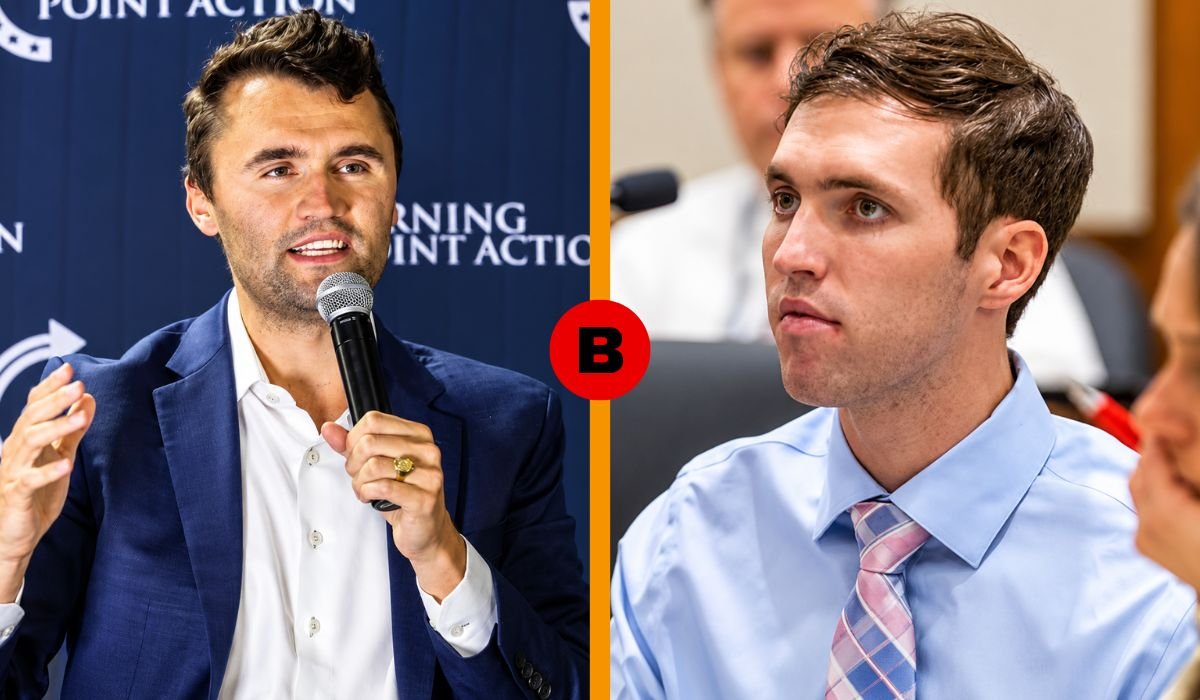
Charlie Kirk was speaking to thousands of students at Utah Valley University on September 10, 2025, when a gunshot suddenly interrupted the event. The 31-year-old conservative activist, known for his outspoken political views and campus debates, was struck in the neck. He was rushed to a hospital but did not survive.
The shooting sent shockwaves through American politics. Kirk wasn’t just a familiar voice in conservative media. As the co-founder of Turning Point USA, he had spent years building a political movement aimed at young Americans. His death immediately raised questions about political violence, the safety of public speakers, and how the gunman managed to escape.
The Charlie Kirk Shot investigation soon led authorities to Tyler Robinson, a Utah man who was arrested and charged with aggravated murder. Robinson has pleaded not guilty, and prosecutors are seeking the death penalty.
But the criminal investigation is only part of the story. In September 2026, an independent security review revealed serious weaknesses in how Utah Valley University prepared for Kirk’s appearance. The findings have brought renewed attention to the decisions made before the shooting and whether stronger precautions could have reduced the danger.
Here’s a closer look at what happened, who was involved, what investigators discovered, and where the case stands in 2026.
Quick Bio Information: Charlie Kirk
|
Information |
Details |
|---|---|
| Full Name | Charles James Kirk |
| Popularly Known As | Charlie Kirk |
| Date of Birth | October 14, 1993 |
| Birthplace | Arlington Heights, Illinois |
| Nationality | American |
| Age at Death | 31 Years |
| Profession | Political Activist, Author, and Commentator |
| Political Views | Conservative |
| Organization | Turning Point USA |
| Organization Founded | 2012 |
| Best Known For | Conservative Activism and Campus Debates |
| Podcast | The Charlie Kirk Show |
| Wife | Erika Kirk |
| Children | Two |
| Date of Death | September 10, 2025 |
| Shooting Location | Utah Valley University, Orem, Utah |
| Event Name | Prove Me Wrong |
| Estimated Attendance | Approximately 3,000 People |
| Defendant Charged | Tyler Robinson |
| Independent Security Review | September 2026 |
Charlie Kirk Shot: What Happened at Utah Valley University?
September 10, 2025, began as another busy day on the campus of Utah Valley University in Orem, Utah. Students had gathered in an outdoor courtyard to hear Charlie Kirk speak as part of his Prove Me Wrong tour.
The format was familiar to anyone who followed Kirk’s career. Audience members could ask questions, challenge his arguments, and debate political issues directly with him.
Around 3,000 people were reportedly present.
During an exchange about mass shootings in the United States, a gunshot rang out at approximately 12:20 p.m. Kirk was struck in the neck while seated beneath a tent.
The crowd quickly descended into confusion. Students and other attendees ran for safety as emergency responders rushed toward the scene.
Kirk was taken to a nearby hospital, where he was pronounced dead.
Investigators later determined that the shot had come from an elevated position on a nearby building. The suspected gunman had apparently used the surrounding campus structures to reach the shooting location before escaping.
What had been planned as a political discussion became the scene of a fatal attack, leaving the university community shaken and prompting a major investigation.
Who Was Charlie Kirk? His Life and Political Influence
Charlie Kirk was born on October 14, 1993, in Illinois. He developed an interest in conservative politics while still young and helped establish Turning Point USA in 2012.
The organization was created to promote conservative political ideas among high school and college students. Over the following decade, it expanded into a nationally recognized political advocacy group.
Kirk became one of its most visible representatives.
Through speaking tours, social media, political conferences, and The Charlie Kirk Show, he built an audience interested in conservative perspectives on American politics and culture.
He regularly discussed immigration, education, religion, free speech, and the direction of the Republican Party.
His approach was often confrontational, particularly during campus debates. Supporters viewed him as someone willing to challenge opposing ideas openly. Critics, meanwhile, questioned many of his arguments and political positions.
Despite those disagreements, his influence within conservative youth politics was substantial.
Kirk also maintained close relationships with prominent Republican leaders, including Donald Trump and JD Vance.
Away from politics, he was married to Erika Kirk, and the couple had two young children.
His death at 31 ended a political career that had already made him a nationally recognizable figure.
Timeline of the Charlie Kirk Shooting
Understanding the sequence of events helps explain how the investigation unfolded and why the university’s security arrangements later came under scrutiny.
Concerns about the event’s location had surfaced before Kirk arrived on campus. In August 2025, university officials discussed potential security risks associated with the outdoor courtyard and suggested alternative venues.
Nevertheless, the event went ahead at the planned location.
On September 10, investigators said the suspected gunman arrived on campus at approximately 11:52 a.m.
Less than half an hour later, around 12:20 p.m., Kirk was shot while answering questions from the audience.
Authorities said the suspected shooter escaped from a rooftop and left the immediate area. Police responded to the scene, and investigators began examining surveillance recordings and physical evidence.
The following day, September 11, the FBI released photographs of a person of interest and announced a $100,000 reward for information leading to the gunman’s identification and arrest.
Tyler Robinson was taken into custody on September 12.
His first court appearance followed on September 16, 2025.
Nearly a year later, on September 1, 2026, Judge Tony Graf ruled that prosecutors had presented sufficient evidence for Robinson to stand trial on seven charges. Robinson pleaded not guilty.
Later that month, Utah Valley University released an independent review examining the security planning and response surrounding Kirk’s appearance.
Together, these developments transformed the case from an urgent search for a suspect into a criminal prosecution accompanied by questions about institutional accountability.
Who Was Involved in the Charlie Kirk Shooting?
Several people and organizations became central to the investigation, although their roles were very different.
Charlie Kirk was the victim. His organization, Turning Point USA, helped arrange the university appearance and was involved in decisions about the event.
Utah Valley University provided the venue, while campus police and Kirk’s private security personnel had responsibilities connected to safety and protection.
Following the shooting, local law enforcement agencies worked alongside federal investigators to collect evidence and identify the suspected attacker.
Tyler Robinson was later charged in connection with Kirk’s death.
It’s important not to confuse the different issues being examined.
The criminal proceedings concern allegations that Robinson carried out the shooting. The independent university review, by contrast, examined whether the event had been planned and secured appropriately.
A failure in security planning does not mean that university officials participated in the crime.
That distinction matters when evaluating both the evidence and the broader questions raised by the tragedy.
Who Is Tyler Robinson, the Suspect in Charlie Kirk’s Killing?
Tyler Robinson is the Utah man accused of killing Charlie Kirk.
He was arrested after investigators initially searched for an unidentified suspect described as appearing to be of college age.
Robinson subsequently faced seven criminal charges, including aggravated murder, unlawful discharge of a firearm causing serious bodily injury, witness tampering, obstruction of justice, and a misdemeanor involving a violent offense committed in the presence of a child.
On September 1, 2026, Fourth District Judge Tony Graf ruled that the prosecution had presented enough evidence for the case to proceed to trial.
Robinson entered a not-guilty plea.
Prosecutors have announced their intention to seek the death penalty if he is convicted.
His defense attorneys have challenged parts of the prosecution’s case, including the interpretation of certain evidence and arguments about motive.
The judge’s decision to send the case to trial should not be mistaken for a finding of guilt. It means the prosecution met the legal threshold required at that stage.
Robinson remains entitled to the presumption of innocence unless and until the charges are proven in court.
What Evidence Did Investigators Recover?
The investigation into Charlie Kirk’s shooting involved surveillance footage, physical evidence, and information gathered from people connected to the case.
During the initial search, FBI officials reported recovering a suspected Mauser .30-06 bolt-action rifle in a wooded area near Utah Valley University.
The weapon was reportedly wrapped in a towel.
Investigators also recovered a palm print and a footwear impression. Surveillance cameras provided additional information about the suspected gunman’s movements before and after the shooting.
Those recordings helped authorities reconstruct the route the suspect allegedly took through the campus.
During Robinson’s preliminary hearing in 2026, prosecutors presented further evidence, including surveillance recordings, DNA and ballistic findings, and messages they attributed to the defendant.
Prosecutors argued that the evidence connected Robinson to the killing.
Defense attorneys disputed aspects of those claims and questioned how certain findings should be interpreted.
This distinction is particularly important in a criminal case. Evidence presented by prosecutors must be examined and challenged through the legal process before a jury or court reaches a final conclusion.
The trial will determine whether the prosecution can prove the charges beyond a reasonable doubt.
What Did the Independent Security Review Reveal?
One of the most significant developments came in September 2026, when Utah Valley University released an independent after-action review of the shooting.
The review examined how the university planned the event, assessed potential risks, coordinated security, and responded to the emergency.
Its findings identified several serious weaknesses.
Although the university had existing safety policies, reviewers found that those procedures were not consistently applied during preparations for Kirk’s appearance.
There was no comprehensive written security assessment or formal event action plan.
The review also raised concerns about the lack of documented assessments of surrounding buildings, elevated locations, and possible lines of sight toward the courtyard.
Communication between university police and Turning Point USA’s security personnel was another major issue.
A proposed joint security meeting and walkthrough did not take place before the event. According to the reviewers, that missed opportunity could have helped clarify responsibilities and identify potential dangers.
Security cameras also became part of the discussion. While footage proved useful during the investigation, the cameras had not been assigned to dedicated real-time monitoring for the event.
Still, the review made an important distinction.
It did not conclude that university employees acted in bad faith or demonstrated willful and wanton disregard for safety.
Instead, the findings pointed to weaknesses in preparation, communication, and the practical implementation of existing security procedures.
The full report is available through the Utah Valley University Independent After-Action Review.
Could Better Security Have Prevented the Shooting?
The independent review raised a question that has remained central to public discussion: Could stronger security precautions have reduced the danger?
There is no definitive answer.
Before the event, university officials had expressed concerns about the outdoor courtyard because it was surrounded by buildings and elevated areas.
Alternative locations, including indoor venues, were suggested.
Turning Point USA preferred the courtyard because Kirk had previously spoken there and the organization was familiar with the setting.
The review also identified a major difference between the expected and actual crowd size.
Organizers initially projected approximately 600 attendees. Around 3,000 people ultimately gathered.
That difference had implications for crowd management, staffing, and emergency planning.
Additional security practices, including rooftop monitoring and more thorough venue assessments, also became subjects of scrutiny.
However, it would be misleading to claim that any single precaution would definitely have prevented the shooting.
The evidence supports a narrower conclusion: stronger preparation and clearer coordination could have helped identify risks and improve the event’s overall security arrangements.
How Did Charlie Kirk’s Family Respond?
For Charlie Kirk’s family, the shooting was first and foremost a personal tragedy.
His wife, Erika, and their two children were left grieving a husband and father whose death had become a national news story.
As more information emerged about the event’s security arrangements, the family began raising questions about whether enough had been done to protect him.
In September 2026, the family took preliminary legal steps toward potential wrongful-death litigation involving Utah Valley University.
Their attorney, Brett Parkinson, said the independent review supported concerns about how the event had been managed.
The family’s position focused on accountability and the possibility that security failures had increased the risks surrounding Kirk’s appearance.
However, a notice of claim is not the same as a court ruling.
Whether the university bears legal responsibility is a separate question from the criminal allegations against Robinson.
Both matters require careful consideration of the available evidence and applicable law.
How Did Donald Trump and Other Political Leaders React?
Charlie Kirk’s death prompted an immediate response from political leaders across the United States.
President Donald Trump expressed condolences and praised Kirk’s role in conservative politics.
Trump also announced plans to award him the Presidential Medal of Freedom posthumously, recognizing his influence within the political movement.
Vice President JD Vance, who had developed a close friendship with Kirk, traveled to Utah with his wife, Usha Vance.
The couple accompanied Kirk’s remains and family as they returned to Arizona.
Utah Governor Spencer Cox described the killing as a political assassination, reflecting the seriousness with which state officials viewed the attack.
The shooting also generated wider discussion about political hostility and the safety of public figures.
Kirk’s opinions were often controversial, and his events regularly attracted people who disagreed strongly with him.
Yet the violence demonstrated why political differences must remain separate from physical threats.
Public debate depends on people being able to express and challenge ideas without fear of being attacked.
How Did the Shooting Affect Utah Valley University?
The consequences of the shooting extended well beyond the immediate investigation.
Students and visitors who attended Kirk’s appearance fled in fear. Some left vehicles, bags, and other belongings behind as they tried to reach safety.
For the university community, the incident created lasting concerns about campus security and emergency preparedness.
It also forced administrators to examine how major events were organized and how responsibilities were shared among different security teams.
Following the independent review, Utah Valley University acknowledged the need for improvements.
The institution reported progress in emergency planning, crisis communication, public safety coordination, and related security practices.
These steps matter because universities regularly host speakers, demonstrations, and large public gatherings.
They must provide space for discussion while also preparing for emergencies.
The challenge is not simply to introduce new policies. It’s to ensure that those policies are understood, practiced, and followed when they are needed.
Latest Updates on the Charlie Kirk Shooting Case in 2026
The legal proceedings remain a central part of the Charlie Kirk shooting story.
On September 1, 2026, Judge Tony Graf ruled that Tyler Robinson should stand trial on all seven charges connected to Kirk’s death.
Robinson pleaded not guilty.
Prosecutors are seeking the death penalty, making the case particularly serious under Utah law.
The preliminary hearing established that the prosecution had presented enough evidence for the case to proceed. It did not determine Robinson’s guilt.
A pretrial conference was scheduled for October 23, 2026.
Meanwhile, the September 2026 independent review brought new attention to the university’s security decisions.
Its findings have also become relevant to the Kirk family’s potential civil claims.
As of October 11, 2026, the reporting reviewed for this article does not establish a final verdict in Robinson’s criminal case.
The next developments will depend on court proceedings, any additional legal filings, and the university’s continued response to the security recommendations.
Why Did the Charlie Kirk Shooting Spark a National Debate?
The killing quickly became more than a criminal investigation.
It raised broader questions about political violence, free speech, and the responsibilities of institutions that host controversial public figures.
Kirk had built much of his career around direct political debate.
His university appearances often brought together supporters, critics, and students who wanted to challenge his arguments.
That kind of exchange can be uncomfortable and emotionally charged, but it remains an important part of democratic discussion.
The shooting renewed concerns about whether public speakers can safely participate in political events without facing threats of violence.
It also highlighted the difficult balance universities must maintain.
They are expected to protect freedom of expression while ensuring that students, employees, speakers, and visitors can attend events safely.
The tragedy showed how quickly those responsibilities can become matters of life and death.
What Can Universities Learn From the Charlie Kirk Shooting?
The independent security review offers lessons that extend beyond Utah Valley University.
Perhaps the clearest is that high-profile events require detailed preparation rather than routine assumptions about safety.
Organizers need accurate attendance estimates, documented risk assessments, and clear emergency response plans.
Security teams must also communicate effectively.
University police, private protection personnel, and event organizers should understand who is responsible for each part of an event before the audience arrives.
The review also demonstrated the importance of examining surrounding buildings, elevated locations, crowd movement, and camera coverage.
Another lesson concerns the gap between written policies and actual practice.
A university may have detailed safety procedures, but those procedures offer limited protection if they are not properly implemented.
No security plan can eliminate every threat.
Still, careful preparation, realistic risk assessments, and effective coordination can make public events safer and improve the response when emergencies occur.
Final Thoughts
The shooting of Charlie Kirk was a tragedy that ended the life of a prominent political activist and left lasting questions about public safety and accountability.
The criminal investigation led to charges against Tyler Robinson, who has pleaded not guilty and is awaiting trial.
At the same time, Utah Valley University’s independent security review identified weaknesses in the planning and coordination surrounding Kirk’s appearance.
These are separate issues, and both deserve careful examination.
The criminal case must be decided through the courts, while questions about institutional responsibility require their own legal and factual assessment.
Beyond the investigation, the shooting serves as a reminder that political disagreement should never become an excuse for violence.
Protecting public discussion means protecting the people who participate in it, even when their views are controversial.
Frequently Asked Questions About the Charlie Kirk Shooting
When Was Charlie Kirk Shot?
Charlie Kirk was shot on September 10, 2025, at approximately 12:20 p.m. local time. He was speaking at an outdoor event at Utah Valley University in Orem, Utah. The attack occurred during a question-and-answer session with students. Kirk was transported to a hospital but died from his injuries.
Where Was Charlie Kirk Shot?
Kirk was shot in an outdoor courtyard at Utah Valley University. Investigators reported that the gunshot came from an elevated position on a nearby building. The location later became a focus of the university’s independent security review because of concerns about surrounding structures and the absence of documented risk assessments.
Who Was Charged With Killing Charlie Kirk?
Tyler Robinson, a Utah man, was charged with aggravated murder and six additional offenses related to the shooting. On September 1, 2026, a judge ruled that he should stand trial. Robinson pleaded not guilty, and prosecutors are seeking the death penalty if he is convicted.
What Weapon Was Recovered After the Shooting?
During the initial investigation, the FBI reported recovering a suspected Mauser .30-06 bolt-action rifle in a wooded area near campus. Officials also reported finding a palm print and footwear impression. Investigators examined surveillance recordings and other evidence as part of their efforts to identify the suspected gunman.
What Did Charlie Kirk’s Security Review Find?
The September 2026 independent review identified problems with security planning, venue assessments, communication, and coordination between university police and private security personnel. It also found that existing safety procedures were not consistently implemented. However, reviewers did not conclude that university employees acted in bad faith or showed willful and wanton disregard for safety.
Did Charlie Kirk’s Family Take Legal Action?
Kirk’s family took preliminary steps toward potential wrongful-death litigation involving Utah Valley University. The family’s concerns center on the security arrangements and whether adequate precautions were taken before the event. A notice of claim does not establish legal responsibility, and any civil allegations must be evaluated separately from the criminal case.
What Is the Latest Update on Tyler Robinson’s Case?
As of October 11, 2026, the latest major court development established in the reporting reviewed here was the September 1 ruling ordering Robinson to stand trial on seven charges. He has pleaded not guilty. A pretrial conference was scheduled for October 23, 2026, and no final verdict has been established by the sources used for this article.
Learn more and explore exciting content on: LeTesha Marrow: Biography, Age, Career, Children, and Family Life