

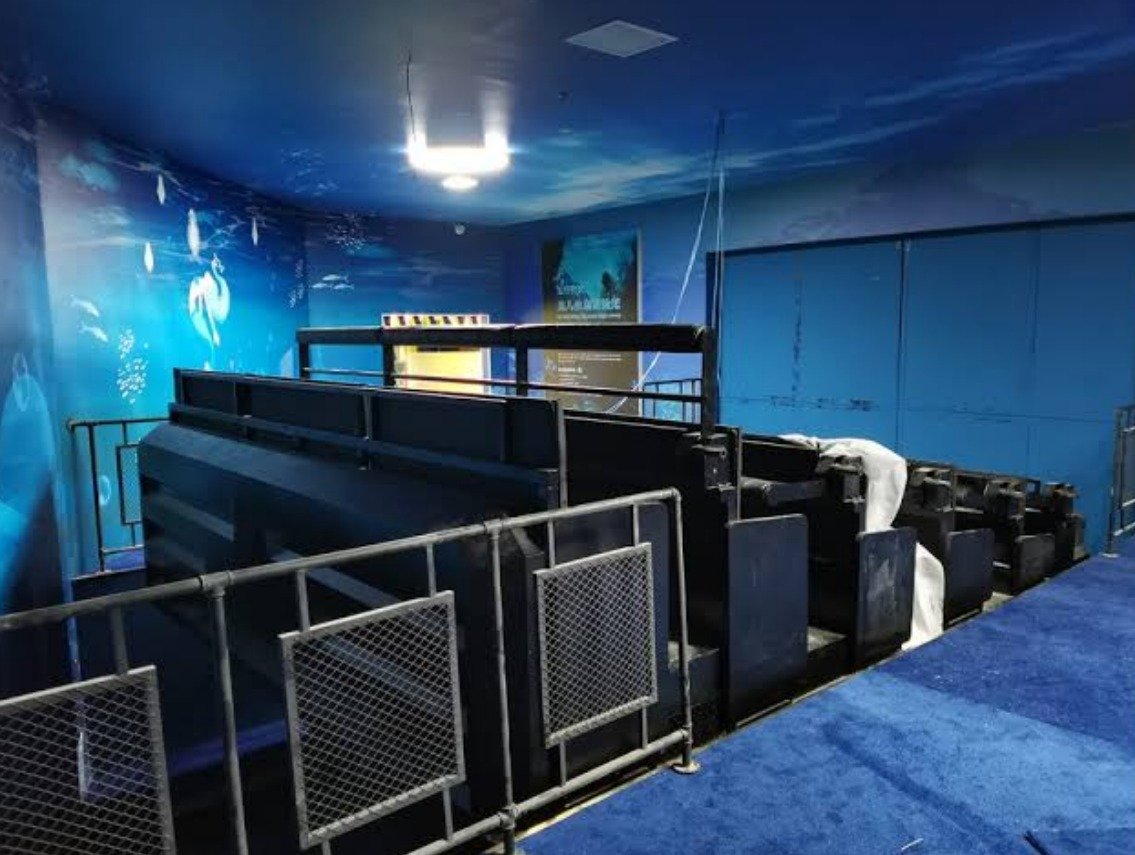
Immersive attractions have become a major part of modern location-based entertainment. Theme parks, museums, shopping malls, family entertainment centers, and tourist destinations are all looking for experiences that can attract visitors, increase dwell time, and create stronger memories.
For many operators, 6DOF motion technology is one of the most attractive options.
6DOF systems can create realistic movement across six axes, making guests feel as if they are flying, racing, diving, floating, or moving through a virtual environment. When used in the right setting, this technology can turn a theater or ride system into a high-impact attraction.
However, investing in 6DOF is not only a technical decision. Operators also need to think about audience fit, space, content, capacity, maintenance, safety, and long-term return.
What Is 6DOF and Why Does It Matter?
6DOF stands for six degrees of freedom. It means a system can move through six axes: pitch, yaw, roll, surge, sway, and heave.
These movements allow a platform to simulate real-world motion more naturally. Instead of only tilting or vibrating, a 6DOF system can create the combined sensations of direction change, acceleration, lift, drop, side movement, and rotation.
For guests, this can make an attraction feel more realistic. For operators, it can create a premium experience that stands out from standard video-based entertainment.
This is especially useful in attractions where motion is central to the story, such as flying theaters, racing simulators, VR rides, motion theaters, and training-style experiences.
When Should a Venue Choose 6DOF?
Not every venue needs the most advanced motion system.
A smaller attraction with simple content may perform well with a more basic motion platform. A family-oriented venue may not need extreme movement. A museum may prioritize comfort and accessibility over thrill intensity.
However, 6DOF is worth considering when the attraction depends on realistic movement and high immersion.
It may be suitable for venues that want to offer:
- Flying experiences
- Racing simulations
- Space missions
- Underwater journeys
- Adventure rides
- VR motion experiences
- Premium indoor attractions
- Training or educational simulations
The decision should begin with the guest experience. What should visitors feel? How intense should the motion be? How long should the experience last? What type of audience will ride it?
Technology should support the business goal, not lead it blindly.
Audience Fit and Ride Intensity
The same 6DOF system can feel very different depending on content and motion programming.
A scenic flying film may feel smooth and graceful. A racing simulator may feel fast and competitive. A fantasy adventure may use sudden drops, turns, and vibration. A training simulator may require precise and realistic motion rather than dramatic effects.
Operators should choose a motion profile that fits their audience.
A family entertainment center may need broader accessibility and moderate thrill. A theme park may want a stronger emotional impact. A science center may need an educational experience that feels engaging but not overwhelming.
Understanding the audience helps prevent two common mistakes: choosing a ride that is too mild to be exciting or too intense for repeat visitors.
Space and Installation Planning
A 6DOF attraction needs careful physical planning.
Operators should consider floor loading, ceiling height, platform footprint, seating layout, queue area, emergency access, projection or display systems, sound design, ventilation, power supply, and control rooms.
If environmental effects are included, such as wind, mist, scent, or lighting, these systems also need space and maintenance access.
The attraction should be planned as an integrated environment, not just a motion platform placed in a room.
Good planning improves safety, visitor flow, staff operation, and long-term reliability.
Content Strategy for 6DOF Attractions
Content is one of the most important parts of a 6DOF investment.
A strong motion system needs content designed for movement. Ordinary video may not take full advantage of the platform. 6DOF content should include visual paths, camera movement, scene changes, and effect cues that work with the motion system.
Operators should also think about content refresh.
If the system supports multiple films or scenarios, the venue may rotate content seasonally, introduce special campaigns, or update the attraction for different audiences. This can help encourage repeat visits.
Content strategy should be considered before installation, because the type of content may affect screen design, motion programming, show length, and capacity planning.
Safety and Maintenance Considerations
Safety is essential in any motion-based attraction.
A 6DOF system should include proper restraints, emergency stop functions, operating procedures, inspection routines, and staff training. Motion intensity should be tested carefully to match the audience and comply with relevant safety standards.
Maintenance is also important.
Because 6DOF systems involve mechanical movement, sensors, software, control systems, and sometimes environmental effects, operators need a clear maintenance plan. Regular inspections help keep the system reliable and reduce downtime.
A ride that delivers strong guest experiences but suffers frequent technical issues can quickly become difficult to operate.
Capacity and Revenue Planning
Attraction capacity affects business performance.
Operators should calculate how many guests can ride per cycle, how long each show lasts, how much time is needed for loading and unloading, and how many cycles can run per hour.
A high-impact 6DOF attraction may justify premium pricing, but it still needs enough throughput to support revenue goals.
For busy venues, queue design and pre-show areas can also improve the experience. A well-designed queue can introduce the story, manage expectations, and reduce perceived waiting time.
6DOF and Multi-Sensory Effects
6DOF motion becomes even more effective when combined with sound, visuals, and environmental effects.
Wind can enhance flight and speed. Mist can support water scenes. Scent can add atmosphere. Lighting can make impacts, storms, or transitions feel more dramatic.
However, operators should avoid using effects only for novelty. Effects should support the story and improve immersion.
A well-timed breeze during a flying scene can feel natural. Random bursts of air may feel distracting. The best attractions use technology with purpose.
Choosing the Right Technology Partner
A 6DOF project requires expertise in motion engineering, content integration, theater design, safety, and operations.
Operators should look for a technology partner that understands both the hardware and the guest experience. The partner should be able to explain system capabilities, installation needs, maintenance requirements, content compatibility, and long-term support.
A good partner can help align the attraction with the venue’s business model.
This is especially important for operators who are new to motion-based entertainment. The right guidance can prevent costly mistakes during design, installation, and operation.
Measuring the Success of a 6DOF Attraction
Success should be measured beyond the opening launch.
Operators can review ticket sales, repeat visits, guest satisfaction, social sharing, queue times, maintenance downtime, and overall contribution to venue traffic.
For educational or museum settings, success may also include learning engagement, visitor feedback, and program flexibility.
A 6DOF attraction should support the venue’s larger goals. It may help attract new visitors, improve the guest journey, create a signature experience, or strengthen the venue’s brand.
Conclusion
6DOF technology can help entertainment venues create immersive attractions that feel more realistic, physical, and memorable. By moving across pitch, yaw, roll, surge, sway, and heave, 6DOF systems can simulate complex real-world motion for flying theaters, racing simulators, VR rides, and motion-based experiences.
For operators, the key is to treat 6DOF as both a technology investment and an experience strategy. Audience fit, content quality, installation planning, safety, maintenance, and revenue potential all matter.
 Apex Apex
 Admin