

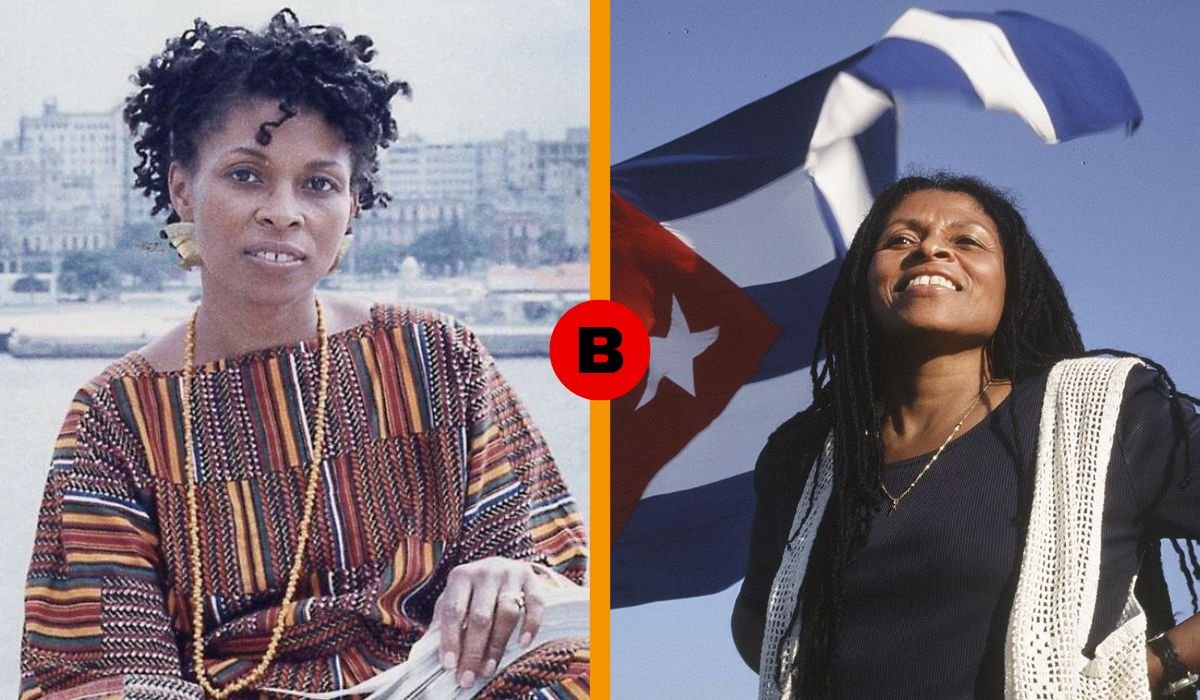
Few figures connected to the American Black liberation movement have inspired as much debate as Assata Shakur. Born Joanne Deborah Chesimard, she became known as a political activist, a member of the Black Panther Party and later an associate of the Black Liberation Army. Her life would eventually be defined by a murder conviction, a dramatic escape from prison, decades in Cuba, and an enduring influence on political activism and popular culture.
For her supporters, Assata Shakur came to represent resistance to racism, inequality, and government power. For law enforcement officials, critics, and those who have focused on the killing of New Jersey State Trooper Werner Foerster, she remained a convicted murderer who escaped a life sentence and spent decades beyond the reach of American authorities.
Shakur consistently maintained that she did not shoot anyone during the 1973 confrontation that led to her conviction. That claim became central to the competing interpretations of her case, but her murder conviction remained legally in place.
When Shakur died in Havana in September 2025, those old arguments quickly returned to public discussion. By then, her influence stretched far beyond the revolutionary politics of the 1970s. Her writings had found new audiences, her name had appeared in hip-hop, and her ideas had resurfaced in conversations about racial justice and policing.
Understanding Assata Shakur, then, requires more than choosing between competing political narratives. Her story is best examined by separating established historical facts and court findings from allegations, personal accounts, and later interpretations.
Quick Bio Information
| Information | Details |
|---|---|
| Full Name | Joanne Deborah Chesimard |
| Known As | Assata Shakur |
| Birth Year | 1947 |
| Birthplace | New York City, United States |
| Nationality | American |
| Known For | Black Liberation Activism And Legal Controversy |
| Political Association | Black Panther Party |
| Later Association | Black Liberation Army |
| Major Legal Case | New Jersey Turnpike Shooting |
| Conviction Year | 1977 |
| Sentence | Life Imprisonment |
| Prison Escape | November 1979 |
| Public Reappearance In Cuba | 1984 |
| Country Of Exile | Cuba |
| Status In Cuba | Political Asylum |
| Notable Book | Assata: An Autobiography |
| FBI Milestone | First Woman Added To FBI Most Wanted Terrorists List |
| Death | September 2025 |
| Place Of Death | Havana, Cuba |
| Age At Death | 78 |
Who Was Assata Shakur?
Assata Shakur was an American Black liberation activist whose public life unfolded during one of the most politically turbulent periods in modern U.S. history. Born Joanne Deborah Chesimard, she later adopted the name Assata Shakur as her cultural identity and political beliefs developed.
Her activism emerged during a period of enormous change. The civil rights movement had achieved major legal victories, but racial inequality remained widespread. At the same time, younger activists were debating policing, poverty, economic inequality, Black nationalism, and whether traditional civil rights strategies could produce deeper social change.
Shakur became involved with the Black Panther Party and was later associated with the Black Liberation Army. Those connections placed her within a movement that was confronting questions of race and power while also attracting intense scrutiny from law enforcement agencies.
Yet activism tells only part of her story. The 1973 New Jersey Turnpike shooting became the defining legal event of Shakur’s life. Her conviction four years later, subsequent prison escape, asylum in Cuba, and decades as a U.S. fugitive transformed her from an American activist into an internationally recognized and deeply polarizing political figure.
Early Life And Political Awakening
Shakur came of age in an America where racial discrimination remained deeply embedded in everyday life. Her early years overlapped with the civil rights movement and a growing national confrontation over segregation, voting rights, policing, poverty, and racial inequality.
As a young woman, she became increasingly interested in Black history and political organizing. Questions about identity, racial justice, economic inequality, and African heritage gradually shaped her worldview.
That political development eventually brought her closer to Black nationalist and revolutionary ideas. Like a number of activists during the era, she also reconsidered the name and identity she had been given at birth.
Joanne Chesimard became Assata Shakur.
The change wasn’t merely cosmetic. It reflected a broader cultural movement among some Black Americans who adopted African-influenced names as a way of reconnecting with African heritage and distancing themselves from identities they associated with slavery and racial oppression.
This context matters because Shakur didn’t develop her political beliefs in isolation. Her transformation occurred during a period when American society was undergoing profound debates about race, authority, citizenship, policing, and the meaning of freedom.
Assata Shakur And The Black Panther Party
Shakur eventually became involved with the Black Panther Party, one of the most influential and controversial political organizations to emerge from the Black Power era.
Founded in Oakland in 1966, the Panthers combined revolutionary political ideas with community organizing. The organization became famous for advocating armed self-defense and openly challenging police practices, but its activities weren’t limited to confrontation.
Black Panther chapters also developed community programs addressing food, health care, political education, and other local needs. That combination of community organizing and revolutionary politics made the group both influential and highly controversial.
Shakur’s experience with the Panthers became an important part of her political development. Her relationship with the organization, however, didn’t last indefinitely.
She later became associated with the Black Liberation Army, an organization connected with underground revolutionary activity and armed actions during the 1970s.
The distinction between these groups is important. The Black Panther Party and Black Liberation Army existed within the wider landscape of Black liberation politics, but they weren’t simply different names for the same organization. Treating them as interchangeable can obscure important parts of Shakur’s political history.
The New Jersey Turnpike Shooting
The event that permanently changed Assata Shakur’s life occurred on May 2, 1973.
Shakur was traveling with Sundiata Acoli and Zayd Malik Shakur when New Jersey State Police stopped their vehicle on the New Jersey Turnpike. What began as a traffic stop escalated into gunfire.
State Trooper Werner Foerster was killed. Another trooper was wounded. Zayd Malik Shakur was also killed, while Assata Shakur suffered serious injuries.
The confrontation became the foundation of the criminal case against her and, eventually, the central controversy surrounding her life.
Authorities prosecuted Shakur in connection with Foerster’s death. Shakur, meanwhile, maintained that she hadn’t shot anyone during the confrontation.
Those facts shouldn’t be blurred together. A jury ultimately found Shakur guilty, and her conviction remained in force. At the same time, she continued to dispute the prosecution’s account and denied firing the fatal shots.
Werner Foerster’s death also deserves more than a passing mention. It was a human tragedy as well as the central event behind the criminal prosecution that followed Shakur for the rest of her life.
Trial And Murder Conviction
After years of legal proceedings, Assata Shakur was convicted in 1977 of first-degree murder and other offenses connected with the New Jersey Turnpike shooting. She was sentenced to life imprisonment.
Her wider legal history during the 1970s was complicated. Shakur faced several other accusations and prosecutions, but not all of those cases resulted in convictions. Some charges were dismissed, while other proceedings ended in acquittals.
That distinction is essential when recounting her biography. Allegations, dismissed charges, acquittals, and convictions aren’t interchangeable.
Shakur and her supporters also challenged the fairness of the Foerster prosecution. They questioned aspects of the evidence and argued that the political climate surrounding Black revolutionary activists affected how she was treated.
Law enforcement authorities rejected those arguments and maintained that her conviction was legitimate. Most importantly from a legal standpoint, the conviction itself was never overturned.
That leaves two separate realities that should be presented clearly. Shakur maintained that she didn’t kill Foerster, while the legal judgment against her remained standing.
Assata Shakur’s Prison Escape
Shakur’s imprisonment took an extraordinary turn in November 1979.
While being held at the Clinton Correctional Facility for women in New Jersey, she escaped with assistance from armed members of the Black Liberation Army. Individuals involved in the operation entered the institution posing as visitors. Guards were taken hostage, and Shakur was removed from custody. No guards were killed during the escape.
She then disappeared underground.
The breakout immediately intensified the search for her and fundamentally changed her status. Shakur was no longer simply a prisoner challenging her conviction; she was now a fugitive who had escaped while serving a life sentence.
For American law enforcement, that distinction was straightforward. Authorities continued trying to apprehend her for decades.
Among her supporters, however, the escape increasingly became part of a different narrative. They described Shakur as a political prisoner who had become a political exile.
Those competing interpretations would follow her across international borders.
How Assata Shakur Reached Cuba
What happened during the period immediately after Shakur’s escape wasn’t fully known to the public. She remained underground before eventually emerging in Cuba, where her presence became publicly known in 1984.
The Cuban government allowed her to remain under political asylum.
That decision can’t be separated from the long and difficult relationship between Cuba and the United States. Following the Cuban Revolution, Havana positioned itself as an ally of revolutionary, anti-colonial, and anti-imperialist movements in different parts of the world. Washington, meanwhile, regarded Cuba’s communist government as a major political adversary.
Shakur’s presence on the island therefore became more than a dispute over a single fugitive.
American authorities viewed her as a convicted murderer who had escaped prison and should be returned to complete her sentence. Cuba viewed her circumstances differently and continued allowing her to remain.
As a result, her case became a recurring point of tension in U.S.–Cuba relations.
Life In Cuba And Political Exile
Cuba eventually became Shakur’s home for roughly four decades.
Although she was outside the direct reach of U.S. law enforcement, she didn’t completely disappear from public life. She gave interviews, discussed her political beliefs, and wrote about her experiences. Over time, her story reached audiences who hadn’t even been born when the New Jersey Turnpike shooting occurred.
Much less is reliably documented about her everyday private life in Cuba. That absence of information is worth acknowledging rather than replacing with speculation.
Her most important contribution to the public record was Assata: An Autobiography, first published in 1988.
The book blends personal memories with Shakur’s reflections on racism, Black identity, political activism, policing, imprisonment, and revolutionary politics. It also provides her version of events surrounding her encounters with law enforcement and prosecution.
For historians and readers, the autobiography is valuable precisely because it reveals how Shakur understood her own experiences. But it is a primary source written from her perspective, not independent verification of disputed events. Recognizing that difference makes it possible to appreciate the book without confusing personal testimony with neutral historical evidence.
Why The FBI Continued Searching For Assata Shakur
Shakur’s long residence in Cuba didn’t end efforts by American authorities to apprehend her.
The case received renewed international attention in 2013 when the FBI added Joanne Chesimard to its Most Wanted Terrorists list. She became the first woman placed on that list.
Authorities also publicized significant rewards for information that could lead to her apprehension. By that point, four decades had passed since the Turnpike shooting, yet the U.S. government still regarded Shakur as a wanted fugitive.
The designation further deepened the divide over her public image.
The FBI and New Jersey authorities described her through the lens of her murder conviction, escape, and fugitive status. Her supporters rejected the terrorism designation and argued that the government’s treatment of her had long been politically motivated.
Neither side’s interpretation erased the underlying legal history. Her 1977 conviction remained standing, and she remained outside U.S. custody until her death.
Assata Shakur And Tupac Shakur
For many younger readers, the name Assata Shakur first became familiar because of its connection to Tupac Shakur.
Tupac reportedly regarded Assata as a godmother, and she had close connections with the wider Shakur family and the political world surrounding it. Those relationships reflected a broader network of activists associated with Black revolutionary politics.
The connection is sometimes simplified online by describing Assata as Tupac’s aunt. That wording can create the impression of a straightforward biological aunt-and-nephew relationship, which doesn’t fully capture the nature of their connection.
What is clear is that Tupac grew up around people deeply influenced by Black liberation politics. Members of his family and social circle had direct connections to revolutionary activism, giving him exposure to political ideas that later appeared in parts of his music and public identity.
Assata belonged to that wider political and cultural environment, helping her story reach an audience far beyond the movements of the 1960s and 1970s.
Influence On Hip-Hop And Popular Culture
Assata Shakur’s cultural influence eventually extended far beyond political organizations.
Hip-hop became one of the most important places where her name and story continued to circulate. Public Enemy referenced Chesimard in its music, while Common later devoted A Song for Assata to her story.
Those references introduced Shakur to listeners who may have known little about the Black Liberation Army, the New Jersey Turnpike case, or the political conflicts of the 1970s.
Music also helped transform her into a cultural symbol, and that transformation generated its own controversy.
Supporters often focused on her writing about racism, imprisonment, political resistance, solidarity, and freedom. Police organizations and critics argued that celebrating her as an icon risked minimizing Werner Foerster’s killing and Shakur’s murder conviction.
The disagreement illustrates how popular culture can reshape historical memory. A person remembered primarily through court records by one audience may be encountered through music, books, or activism by another.
Assata Shakur And Modern Racial Justice Activism
Decades after Shakur left the United States, her writings found another generation of readers during the growth of Black Lives Matter and wider protests over policing and racial inequality.
Language associated with her political writing circulated within some activist communities, connecting contemporary racial justice campaigns with earlier Black liberation struggles.
That renewed interest didn’t mean there was a single activist position on Assata Shakur. Modern racial justice movements include people with different political philosophies, and interest in her writing shouldn’t automatically be interpreted as support for every organization, belief, or action connected to her history.
Her prominence nevertheless attracted renewed criticism. Law enforcement organizations and others argued that a person convicted in the killing of a police officer shouldn’t be elevated as an inspirational political figure.
The debate showed how Shakur’s significance had evolved. She was no longer discussed only as a figure from the 1970s. Her name had become part of a continuing argument about policing, racial justice, political resistance, and how later generations interpret controversial historical figures.
Assata Shakur’s Death In Cuba
Assata Shakur died in Havana in September 2025 at the age of 78, bringing an extraordinary chapter of American and Cuban political history to a close.
Cuba’s Ministry of Foreign Affairs announced her death and said it resulted from health conditions and advanced age. Shakur’s daughter also publicly confirmed her death.
The reaction was immediate and sharply divided.
Black liberation and racial justice activists remembered Shakur as a writer, revolutionary thinker, and political exile whose work had influenced later generations.
New Jersey officials and law enforcement representatives emphasized a very different history. Their statements returned attention to Werner Foerster’s killing and to the fact that Shakur had spent decades in Cuba without being returned to the United States to continue serving her sentence.
Her death ended any realistic possibility of extradition. It didn’t, however, resolve the arguments that had surrounded her since the 1970s.
Why Assata Shakur’s Story Still Matters
The continuing interest in Assata Shakur isn’t explained by a single court case or political movement.
Her biography intersects with many of the defining issues of modern American history: the civil rights movement, Black Power, revolutionary politics, racial inequality, policing, criminal justice, government surveillance, political asylum, U.S.–Cuba relations, feminism, literature, and hip-hop culture.
Her story also offers an important lesson about evaluating controversial historical figures.
An accusation isn’t the same as a conviction. An acquittal isn’t proof of every broader claim made by a defendant. An autobiography provides valuable firsthand testimony but isn’t automatically independent evidence. Political admiration doesn’t erase legal history, just as a criminal conviction doesn’t by itself explain why a person’s writings or ideas influenced later generations.
Keeping those distinctions clear makes Shakur’s story more complicated, but it also makes the history more accurate.
Assata Shakur’s Complicated Legacy
More than anything else, complexity defines Assata Shakur’s legacy.
Her supporters remember a woman who wrote forcefully about racism, imprisonment, inequality, and political resistance. Assata: An Autobiography remains an influential text among readers interested in Black liberation politics, gender, policing, and American social history.
Her influence can also be heard in music and seen in activist language that appeared decades after she left the United States.
But an accurate assessment can’t stop there.
Werner Foerster was killed during the 1973 confrontation. Shakur was convicted of his murder in 1977 and sentenced to life imprisonment. She escaped custody two years later and lived outside the United States for the remainder of her life. Her conviction was never overturned.
Shakur maintained that she didn’t shoot anyone, and supporters continued challenging the prosecution’s interpretation of the case. Those arguments form part of the historical record as well, but they don’t change the legal outcome.
Holding these realities together may be less satisfying than choosing one political narrative. It is also a more responsible way to understand why Assata Shakur remained such a contested figure for more than half a century.
Final Thoughts
Assata Shakur’s life crossed some of the most turbulent political landscapes of modern American history.
She began life as Joanne Deborah Chesimard and became a Black liberation activist, defendant, convicted prisoner, fugitive, Cuban exile, author, and international political symbol. Few American political figures have moved through so many different identities in the public imagination.
More than half a century after the New Jersey Turnpike shooting, the arguments surrounding her haven’t disappeared. Instead, they have been inherited by new generations that encounter Shakur through history books, political movements, music, social media, and her own writing.
For readers examining Assata Shakur in 2026, context matters more than slogans.
Established facts should be separated from allegations. Court findings should be distinguished from Shakur’s own claims. Her cultural influence can be examined without ignoring her conviction, while the legal history can be reported without pretending it fully explains why her writing resonated with so many people.
Assata Shakur died in Cuba, but the larger questions surrounding her life remain unresolved in American public memory. Race, policing, political resistance, criminal justice, exile, U.S.–Cuba relations, and the meaning of historical legacy all intersect in her story.
That tension is ultimately why Assata Shakur remains important to understand.
FAQs About Assata Shakur
Who Was Assata Shakur?
Assata Shakur, born Joanne Deborah Chesimard, was an American Black liberation activist associated with the Black Panther Party and later the Black Liberation Army. She was convicted of murder in 1977, escaped from prison in 1979, and eventually received political asylum in Cuba. She remained there until her death in 2025.
What Was Assata Shakur Convicted Of?
Assata Shakur was convicted of first-degree murder and other offenses connected with the 1973 New Jersey Turnpike confrontation in which State Trooper Werner Foerster was killed. Shakur maintained that she didn’t shoot anyone during the confrontation, but her murder conviction was never overturned.
Why Did Assata Shakur Live In Cuba?
After escaping from prison in 1979, Shakur spent time underground before eventually reaching Cuba. The Cuban government allowed her to remain under political asylum. American authorities repeatedly sought her return, but she continued living in Cuba for roughly four decades.
Was Assata Shakur A Black Panther?
Yes. Assata Shakur was involved with the Black Panther Party during part of her political development. She later became associated with the Black Liberation Army. Although both existed within the wider history of Black liberation politics, they were distinct organizations and shouldn’t be treated as interchangeable.
Was Assata Shakur Related To Tupac Shakur?
Assata Shakur had close connections with Tupac Shakur’s family, and Tupac reportedly regarded her as a godmother. She is sometimes described as his aunt, but that wording can give a misleading impression of a simple biological aunt-and-nephew relationship. Their connection was rooted in a wider network of family, personal, and political relationships.
Why Was Assata Shakur On The FBI Most Wanted Terrorists List?
The FBI added Joanne Chesimard to its Most Wanted Terrorists list in 2013, making her the first woman placed on that list. U.S. authorities continued seeking her because of her murder conviction, prison escape, and fugitive status while she was living in Cuba.
What Book Did Assata Shakur Write?
Shakur’s best-known work is Assata: An Autobiography, first published in 1988. It covers her upbringing, political development, activism, imprisonment, experiences with law enforcement, and her own interpretation of the legal and political conflicts surrounding her. Because it is an autobiography, it is best understood as her firsthand perspective rather than an independent account of disputed events.
When Did Assata Shakur Die?
Assata Shakur died in Havana, Cuba, in September 2025 at the age of 78. Cuba’s Ministry of Foreign Affairs attributed her death to health conditions and advanced age, and her daughter also publicly confirmed her death.
Learn more and explore exciting content on: LetFlix Explained: Features, Movies, TV Shows, and More