

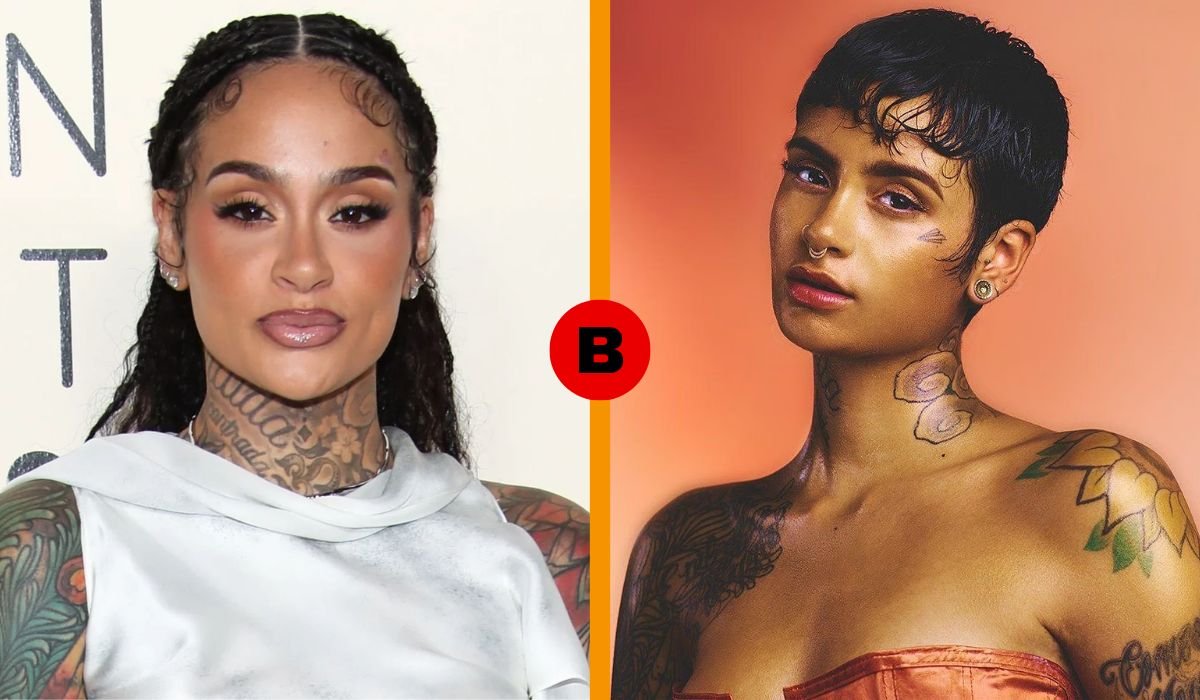
Kehlani has spent more than a decade building a distinctive place in contemporary R&B. While their music has introduced millions of listeners to their voice and songwriting, fans have also become increasingly interested in the person behind the records. Questions about Kehlani Ethnicity, Nationality, Parents, Heritage, and Family Roots remain especially common.
Born Kehlani Ashley Parrish on April 24, 1995, in Oakland, California, the singer comes from a mixed family background. Kehlani has publicly described their ethnicity as Black, White, Native American, Filipino, and Spanish. Still, not every part of that ancestry has been equally documented. In an earlier interview, Kehlani explained that their mother had told them about Filipino ancestry, although other relatives hadn’t confirmed that part of the family’s history.
That distinction is important. Celebrity biographies often repeat ancestry claims until uncertain information begins to look established. Kehlani’s own statements provide a much stronger starting point.
Their story, however, is about far more than ancestry. Kehlani grew up amid difficult family circumstances, was largely raised by an aunt, discovered a passion for performing, competed on America’s Got Talent with PopLyfe, and eventually established a successful solo career. In 2026, that long journey reached another milestone when “Folded” earned Kehlani their first Grammy victories.
Quick Bio Information
| Bio Detail | Information |
|---|---|
| Full Name | Kehlani Ashley Parrish |
| Professional Name | Kehlani |
| Date Of Birth | April 24, 1995 |
| Age In 2026 | 31 Years Old |
| Birthplace | Oakland, California, United States |
| Nationality | American |
| Ethnicity | Mixed |
| Self-Described Heritage | Black, White, Native American, Filipino, And Spanish |
| Profession | Singer And Songwriter |
| Main Genre | R&B |
| Former Group | PopLyfe |
| Early TV Break | America’s Got Talent |
| School | Oakland School For The Arts |
| Debut Mixtape | Cloud 19 |
| Second Mixtape | You Should Be Here |
| Debut Studio Album | SweetSexySavage |
| 2024 Album | Crash |
| Children | One Daughter |
| Daughter’s Name | Adeya Nomi |
| Grammy Record By 2026 | 2 Wins From 7 Nominations |
These basic details provide a useful introduction, but they don’t tell the whole story. To understand Kehlani’s background, it helps to separate ethnicity from nationality and then look at the family and community experiences that shaped their early life.
What Is Kehlani’s Ethnicity?
The straightforward answer is that Kehlani’s Ethnicity is mixed. Kehlani has described their background as Black, White, Native American, Filipino, and Spanish.
That description is more reliable than online attempts to assign exact percentages to each part of their ancestry. There is no solid public evidence establishing a precise percentage breakdown, and Kehlani’s own comments suggest that some branches of the family history aren’t completely documented.
Filipino heritage is a good example. In a detailed 2015 profile, Kehlani said their mother had told them there was some Filipino ancestry in the family. At the same time, they acknowledged that other relatives hadn’t verified it. That doesn’t mean the family story is necessarily incorrect; it simply means the available evidence doesn’t support presenting a detailed Filipino lineage as confirmed fact.
For readers wondering about Kehlani Heritage, the most responsible description is therefore a multiracial background that includes Black, White, Native American, Spanish, and reported Filipino roots.
Kehlani’s Nationality And Ancestry
Nationality and ethnicity are often treated as though they mean the same thing, but they answer different questions.
Kehlani’s Nationality is American. They were born in Oakland, California, and grew up in the Bay Area. Their ancestry, on the other hand, refers to the different family roots that make up their heritage.
This distinction matters because a person can be American while also having ancestry connected to several racial, ethnic, or cultural groups. Describing Kehlani as American is accurate, but it doesn’t fully answer a question about their ethnic background.
Likewise, describing Kehlani as mixed doesn’t give anyone permission to invent percentages or construct a detailed family tree. Where Kehlani has spoken about their own identity, those statements offer the clearest guide.
Kehlani’s Oakland Roots
If ancestry explains part of Kehlani’s background, Oakland explains another major part of it.
Kehlani was born and raised in Oakland and has maintained a strong connection to the Bay Area throughout their career. The city wasn’t simply their birthplace. It was the environment in which they experienced childhood, discovered music, developed as a performer, and began imagining a life in entertainment.
That context is important when discussing Kehlani’s Background. Identity isn’t created by ancestry alone. Neighborhoods, schools, family relationships, friendships, music, and local culture can be just as influential in shaping how someone understands themselves.
For Kehlani, Oakland remained part of their public identity even after their career expanded far beyond the Bay Area.
Who Are Kehlani’s Parents?
Kehlani has been open about the difficult circumstances surrounding their biological parents, although many personal details about them have remained outside the public record.
Both parents reportedly struggled with substance addiction. Kehlani’s mother wasn’t consistently present during their early childhood and experienced periods of incarceration, while their father died when Kehlani was very young.
With neither biological parent able to provide a conventional, stable home throughout those early years, other members of the family became especially important.
Readers may come across websites that provide specific names for Kehlani’s Parents or assign an exact ethnicity to each parent. Those claims aren’t consistently supported across stronger sources. Rather than treating uncertain information as established biography, it is more accurate to rely on Kehlani’s own description of their overall heritage.
What Happened To Kehlani’s Father?
Kehlani lost their biological father at a very young age. Published profiles have linked his death to struggles with substance addiction.
Because the loss happened so early in Kehlani’s life, they never had the chance to develop a long-term relationship with him. His absence became one part of a childhood already affected by instability.
Online searches for Kehlani’s Father’s Ethnicity often produce conflicting answers. Some sources attempt to assign particular racial or ethnic backgrounds to him, but the available reliable reporting doesn’t provide enough consistency to build a definitive parent-by-parent ancestry chart.
What is much clearer is Kehlani’s own description of their broader mixed heritage and the fact that losing their father was part of the difficult family circumstances surrounding their earliest years.
Kehlani’s Mother And Childhood
Kehlani’s relationship with their mother has also been a complicated part of their story.
Their mother struggled with addiction and experienced periods of incarceration, which meant she couldn’t provide consistent care during Kehlani’s childhood. Those experiences left emotional marks that later appeared in Kehlani’s music.
“The Letter,” for example, explores feelings connected with maternal absence and the unanswered questions that can remain when a parent isn’t consistently present.
This history adds much-needed context to Kehlani’s Family Background. Their upbringing wasn’t shaped only by ethnicity or ancestry. It was also shaped by loss, separation, uncertainty, and the relatives who stepped forward when their biological parents couldn’t.
Those experiences would eventually become part of the emotional honesty listeners came to recognize in Kehlani’s work.
Who Raised Kehlani?
An aunt became one of the most important figures in Kehlani’s childhood.
Kehlani spent time in foster care before being taken in by their aunt, who raised them in Oakland. Kehlani has spoken warmly about the sacrifices their aunt made and the stability she brought into their life.
The relationship went far beyond having somewhere to live. Their aunt became a maternal figure at a time when Kehlani needed consistency, care, and a sense of home.
She also helped create an environment where music was always nearby. That influence would become increasingly important as Kehlani grew older.
Looking at their aunt’s role gives a fuller understanding of Kehlani’s family story. Biological ancestry tells us where someone’s family comes from, but the people who actually raise and support a child can have an equally lasting influence on who that child becomes.
How Kehlani’s Aunt Influenced Their Music
Music filled the home where Kehlani grew up.
Through their aunt, Kehlani heard influential R&B and neo-soul performers such as Lauryn Hill, Erykah Badu, and Jill Scott. That early exposure introduced them to artists known for expressive vocals, personal songwriting, and music rooted in emotion.
Interestingly, Kehlani’s first serious artistic ambition wasn’t centered entirely on singing.
They attended the Oakland School For The Arts, where dance became an important focus. Kehlani studied ballet and modern dance and initially imagined a future built around movement and performance.
An injury disrupted those plans. Instead of ending their creative ambitions, however, the setback pushed Kehlani more seriously toward singing.
In hindsight, the change proved pivotal. A closed door in dance helped open the path that would eventually lead to an international music career.
PopLyfe And America’s Got Talent
Kehlani’s first taste of national attention arrived while they were still a teenager.
They became the lead vocalist of the Bay Area group PopLyfe, which competed on Season 6 of America’s Got Talent in 2011. The group performed well throughout the competition and ultimately finished in fourth place.
For a young Kehlani, the show offered valuable exposure. Millions of viewers were introduced to their voice years before songs such as “Distraction,” “After Hours,” and “Folded” would become part of their solo catalog.
But national television didn’t guarantee an easy transition into a successful career.
Kehlani eventually separated from PopLyfe and went through a challenging period before gaining momentum independently. That part of the story is easy to overlook, but it makes their later success more meaningful. The path from a teenage talent-show contestant to an established R&B artist involved uncertainty, persistence, and considerable personal growth.
Kehlani’s Solo Career
Kehlani’s solo breakthrough didn’t happen all at once.
Their 2014 mixtape Cloud 19 helped introduce a more mature musical identity, while You Should Be Here followed in 2015 and brought wider recognition. The latter project also earned Grammy recognition, signaling that Kehlani was developing into far more than a former reality-competition contestant.
Their debut studio album, SweetSexySavage, arrived in 2017. Kehlani continued building their catalog with projects including It Was Good Until It Wasn’t, Blue Water Road, and Crash.
Across those releases, they developed a reputation for emotionally direct R&B that could move comfortably between intimacy, vulnerability, desire, heartbreak, and self-examination.
Then came “Folded.”
The song became a major career milestone and, at the 2026 Grammy Awards, earned Kehlani their first Grammy victories. “Folded” won Best R&B Performance, while Kehlani was also among the songwriters honored when it won Best R&B Song. The Recording Academy lists Kehlani with two wins from seven nominations as of 2026.
For an artist whose first Grammy nomination came a decade earlier, the moment represented a long-awaited achievement.
Identity And Self-Expression
Kehlani has never been known for keeping every part of their inner life at a distance from listeners.
Their songwriting frequently explores vulnerability, relationships, sexuality, healing, heartbreak, and personal change. That openness has made identity an important part of conversations surrounding their work.
Still, it’s too simplistic to explain those qualities solely through Kehlani Ethnicity.
Ancestry is one piece of a person’s identity, but it isn’t a complete explanation for their art. Kehlani’s Oakland upbringing, childhood experiences, musical influences, relationships, spirituality, career struggles, and experience as a parent have all contributed to the perspective heard in their music.
Considering those influences together gives a far richer picture than treating ethnicity as the answer to every question about who Kehlani is.
Kehlani’s Pronouns
Kehlani has publicly used both she/her and they/them pronouns, and she/they is commonly used when referring to the singer. Kehlani has also spoken about feeling particularly affirmed when people use “they.”
This subject is sometimes included in searches about Kehlani’s background, but pronouns and ethnicity describe entirely different aspects of identity.
Ethnicity relates to cultural or ancestral background. Nationality describes national belonging or citizenship. Pronouns concern how a person wishes to be referred to.
Keeping those distinctions clear makes it easier to discuss Kehlani’s identity accurately and respectfully.
Kehlani’s Spiritual Life
Spirituality is another part of Kehlani’s life that has attracted public interest.
Kehlani has spoken about practicing Lucumí, also known as Regla de Ocha, a religious tradition with roots in Yoruba spiritual practices and a history shaped by the African diaspora in Cuba.
In discussing their spiritual life, Kehlani has spoken about practices related to spiritual cleanliness and well-being.
It’s important, however, not to use religion as evidence of someone’s ethnicity. Spiritual traditions and cultural heritage can intersect, but they aren’t interchangeable. A person’s religion shouldn’t be treated as proof of a particular ancestral identity.
That distinction is particularly useful when examining Kehlani’s Heritage, where several aspects of identity are often grouped together online.
Kehlani As A Mother
Kehlani’s family story took on a different meaning when they became a parent themselves.
In March 2019, Kehlani welcomed their daughter, Adeya Nomi, with Javaughn Young-White. Motherhood added another layer to a personal history already deeply shaped by family relationships.
There’s a striking contrast between Kehlani’s early childhood and their adult experience as a parent. Their own upbringing involved parental absence and the intervention of extended family, while adulthood gave them an opportunity to build a relationship with their own daughter.
Adeya has occasionally joined Kehlani at public events, giving fans small glimpses of their bond.
Although parenthood isn’t directly related to Kehlani Ethnicity, it helps complete the family story. Kehlani’s biography isn’t only about the family they came from; it now includes the family life they’ve built as an adult.
Common Misconceptions About Kehlani’s Ethnicity
Anyone researching Kehlani Ethnicity will quickly notice that different websites don’t always provide the same answer.
Some describe Kehlani as Black, White, Native American, Filipino, and Spanish. Others introduce labels such as Hispanic, Latina, or Mexican. Still others divide specific ethnic backgrounds between Kehlani’s mother and father as though a fully documented family tree were publicly available.
That’s where caution becomes necessary.
Kehlani’s own publicly reported description remains the strongest starting point: Black, White, Native American, Filipino, and Spanish. At the same time, an earlier profile recorded Kehlani saying their mother had told them about Filipino ancestry while other relatives hadn’t verified it.
There is also no reliable public basis for assigning exact percentages to these backgrounds.
Rather than combining every claim found online, the more responsible approach is to separate Kehlani’s own words from details that have simply been repeated by secondary websites.
Understanding Kehlani’s Heritage
Perhaps the most useful thing to remember about Kehlani’s Heritage And Family Roots is that identity doesn’t always fit neatly into a single box.
Kehlani is American by nationality and Oakland-born by upbringing. They have publicly described a mixed racial and ethnic background, while also acknowledging uncertainty around at least one part of their reported ancestry.
That complexity isn’t unusual. Family histories can include oral traditions, incomplete records, different ways of describing identity, and stories passed between generations. What matters journalistically is distinguishing between what a person has said about themselves and what can be independently established.
The same principle applies to Kehlani’s parents. Where reliable information is limited, uncertainty is more accurate than filling gaps with unsupported details.
That approach gives readers something more valuable than a simple label: a clearer picture of what is known, what Kehlani has personally described, and what remains uncertain.
Final Thoughts
Kehlani Ethnicity is best understood as mixed. Kehlani has publicly described themselves as Black, White, Native American, Filipino, and Spanish, though they previously acknowledged that their reported Filipino ancestry hadn’t been confirmed by other family members.
Their nationality is American, and their connection to Oakland remains a central part of their personal and professional story.
Yet heritage is only one layer of Kehlani’s life.
Their childhood included parental absence, loss, time in foster care, and the crucial support of an aunt who helped provide stability. Their early passion for dance eventually gave way to singing, leading to PopLyfe, America’s Got Talent, independent music, acclaimed albums, and a successful solo career.
By 2026, that journey had reached a landmark moment. “Folded” earned Kehlani their first Grammy wins, taking Best R&B Performance and Best R&B Song. The Recording Academy records two wins from seven nominations for Kehlani.
Knowing Kehlani’s ancestry provides useful context, but understanding the people, places, challenges, and experiences surrounding that ancestry offers a much more complete portrait.
FAQs About Kehlani Ethnicity
What Is Kehlani’s Ethnicity?
Kehlani has publicly described their ethnicity as Black, White, Native American, Filipino, and Spanish. There is some uncertainty surrounding the Filipino part of that heritage. Kehlani previously said their mother told them there was Filipino ancestry in the family, while other relatives hadn’t verified it.
What Is Kehlani’s Nationality?
Kehlani is American. They were born on April 24, 1995, in Oakland, California, and grew up in the Bay Area. Nationality shouldn’t be confused with ethnicity; Kehlani can be American while having a multiracial and multicultural family background.
Is Kehlani Filipino?
Kehlani has included Filipino heritage when discussing their background. However, an earlier profile reported that Kehlani learned about that ancestry from their mother and said other relatives hadn’t confirmed it. For that reason, it’s more precise to describe Filipino heritage as part of Kehlani’s reported family ancestry rather than claim a fully documented Filipino family line.
Is Kehlani Native American?
Kehlani has publicly included Native American ancestry when describing their ethnicity. That statement shouldn’t automatically be interpreted as evidence that Kehlani is an enrolled citizen or member of a particular Native American tribe, as those are separate questions requiring specific documentation.
Is Kehlani Spanish?
Spanish is among the backgrounds Kehlani has publicly used when describing their mixed ethnicity. Some secondary biographies use different terminology for this part of their ancestry, which is one reason Kehlani’s own description should be prioritized over conflicting celebrity-biography claims.
Where Is Kehlani From?
Kehlani is from Oakland, California. They were born there in 1995 and grew up in the Bay Area. Oakland also played an important role in Kehlani’s artistic development and remains closely associated with their public identity.
Who Raised Kehlani?
Kehlani was largely raised by an aunt after experiencing instability involving their biological parents. They also spent time in foster care before their aunt took them in. Kehlani has spoken appreciatively about their aunt’s role as a maternal figure.
Has Kehlani Won A Grammy?
Yes. Kehlani earned their first Grammy wins in 2026 with “Folded.” The song won Best R&B Performance, and Kehlani was among the songwriters honored for Best R&B Song. The Recording Academy currently lists Kehlani with two Grammy wins from seven nominations.
Learn more and explore exciting content on: Who Is Izaak Theo Adu? Meet Sade’s Son and Discover His Inspiring Story